


- Europe risks footing the bill for America's AI boom while failing to share in the economic gains.
- AI is a special case because it requires sharing commercially sensitive data and applies across the whole economy.
- Within years AI will run border screening, tax audits, trains, patient monitoring and bank payments, making any withdrawal broadly disruptive.
- European savers are financing the US build out, holding about 440 billion euros in US tech shares while Europe lags infrastructure.
- The United States produced 59 notable AI models last year, China 35, while France and the UK each produced one.
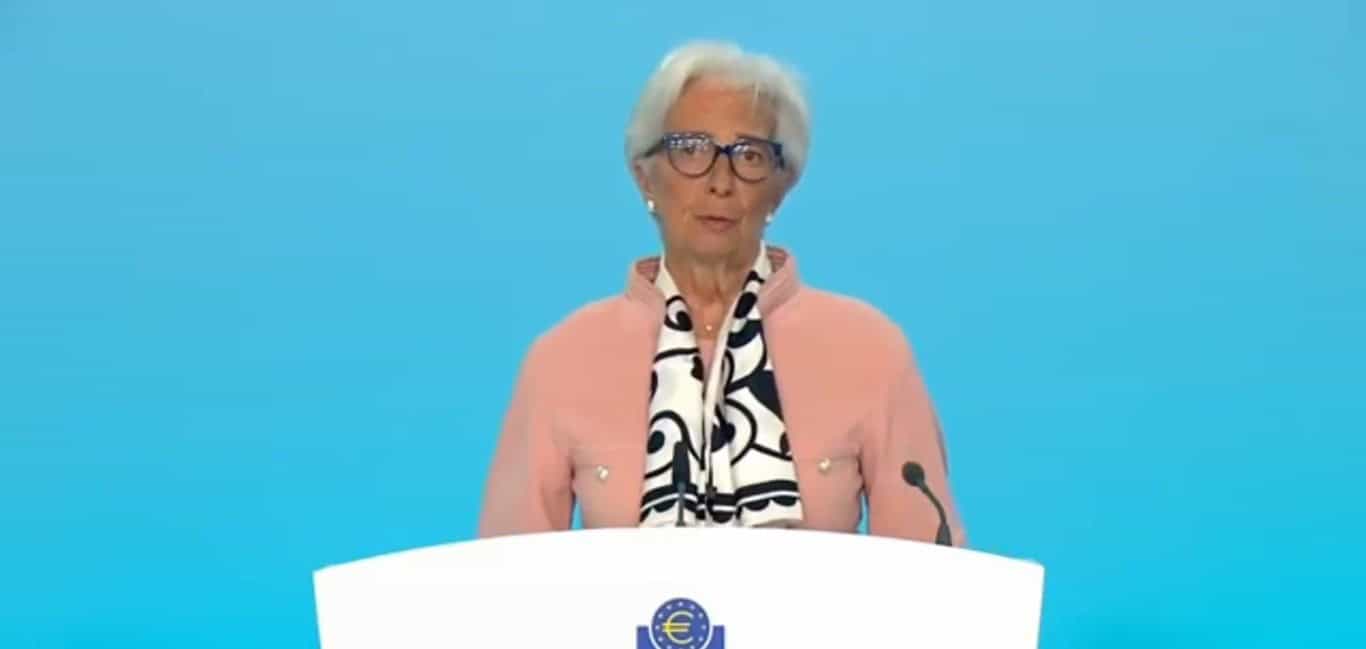
Europe risks paying for the AI boom in the United States without sharing in the profits, European Central Bank chief Christine Lagarde warned Monday.
Speaking in Vienna, Lagarde said there was nothing wrong with importing foreign technologies in principle.
But the applicability of artificial intelligence tools across the economy as well as the need to share commercially sensitive data with them made the technology a special case, she added.
“Within a few years it will be screening goods at the border, deciding which tax returns are audited, dispatching trains, watching patients on wards and clearing payments at banks,” she said.
“A withdrawal of access, or a change in its terms, would then reach every sector all at once,” she added.
“That is the kind of leverage no trade partner has ever held over Europe.”
At the same time, European savers were paying for the US build-out while Europe’s infrastructure lagged behind, Lagarde said.
“European savers are again financing the transformative technology of the age,” she said, explaining that European households held about 440 billion euros ($508 billion) of shares in US tech firms like Nvidia and Alphabet.
“The companies are being built elsewhere,” she added. “Last year the United States produced 59 notable AI models and China produced 35. France and the United Kingdom produced one each.”
Lagarde’s comments come after high-profile warnings from US AI firms that the technology’s rapid development could put people in danger if AI agents went rogue or outsmarted human-imposed guardrails.
Anthropic’s CEO Dario Amodei on Saturday called for a slowdown in AI development.
The call was later backed by OpenAI boss Sam Altman and Elon Musk, owner of xAI and chief executive of SpaceX and Tesla, who was previously part of Trump’s White House team.