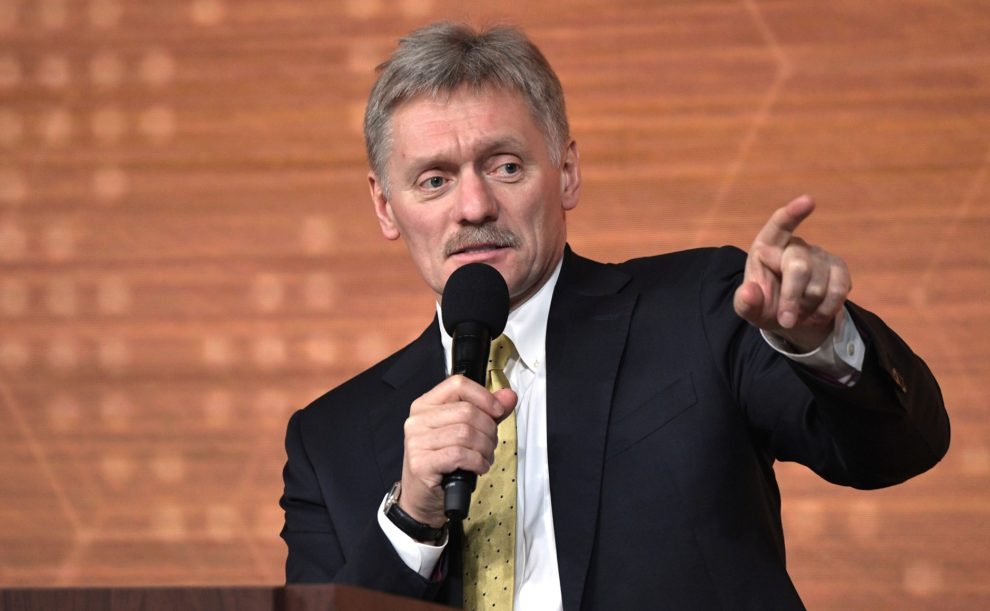
Russia would only use nuclear weapons in the context of the Ukraine conflict if it were facing an “existential threat,” Kremlin spokesman Dmitry Peskov told CNN International Tuesday.
“We have a concept of domestic security, and it’s public. You can read all the reasons for nuclear arms to be used,” Peskov said. “So if it is an existential threat for our country, then it can be used in accordance with our concept.”
Peskov’s comment came as interviewer Christiane Amanpour pushed him on whether he was “convinced or confident” that President Vladimir Putin would not use the nuclear option in the Ukrainian context.
Days after Russian troops invaded Ukraine, Putin announced on February 28 that he had put the country’s strategic nuclear forces on high alert in a move that sparked global alarm.
Asked about Peskov’s statement, and Russia’s nuclear stance more broadly, Pentagon spokesman John Kirby called Moscow’s rhetoric on potential use of nuclear weapons “dangerous.”
“It’s not the way a responsible nuclear power should act,” he told reporters.
That said, Kirby stressed that Pentagon officials “haven’t seen anything that would lead us to conclude that we need to change our strategic deterrent posture.”
“We monitor this as best we can every day,” he added.
Russia maintains the world’s largest stockpile of nuclear warheads, and has earned minimal support around the world for its attack on its ex-Soviet neighbor.
Western defense officials said following Putin’s February announcement that they had not seen any significant sign of mobilization of Russia’s nuclear forces — its strategic bombers, missiles and submarines.
But Moscow has also warned that if the United States and NATO allies supplied Ukraine with fighter jets, it could escalate and expand the war, potentially putting Russia in direct confrontation with nuclear-armed rivals in the West.
Earlier this month Beatrice Fihn, who leads the International Campaign to Abolish Nuclear Weapons, warned Putin is using nuclear “blackmail” to keep the international community from interfering in his Ukraine invasion.
“This is one of the scariest moments really when it comes to nuclear weapons,” she said.
Questioned further about Russia’s offensive in Ukraine, Peskov said it had no intention of occupying its neighbor and asserted his country was not attacking civilians.
The main goals of the “operation,” he said, are “to get rid of the military potential of Ukraine.”
“This is why our military are targeting only military goals and military objects on the territory of Ukraine. Not civil ones,” he said.
Widespread photographic and video evidence supports human rights groups’ allegations that Russian forces have attacked numerous civilian targets in the ex-Soviet state.