




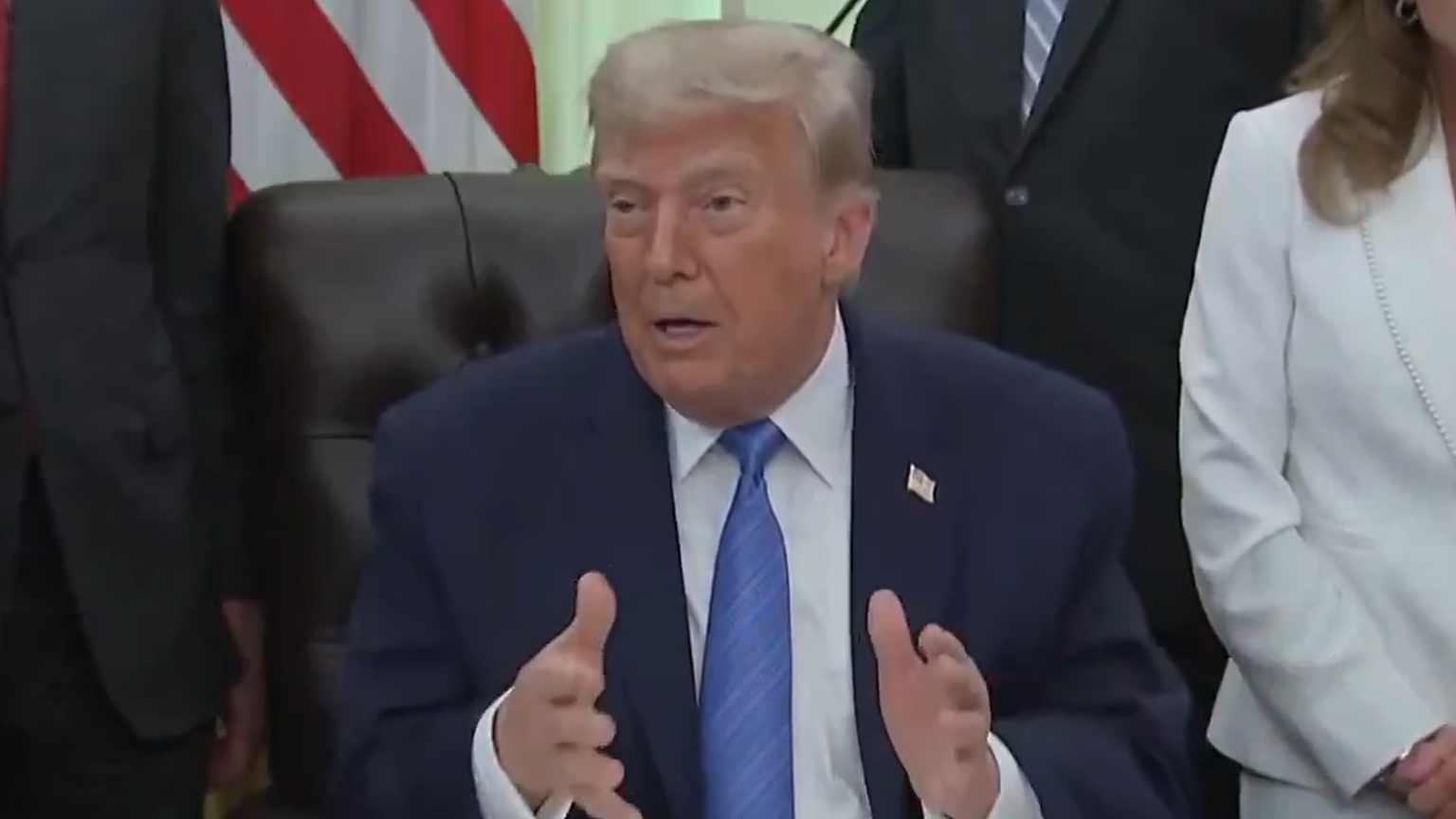
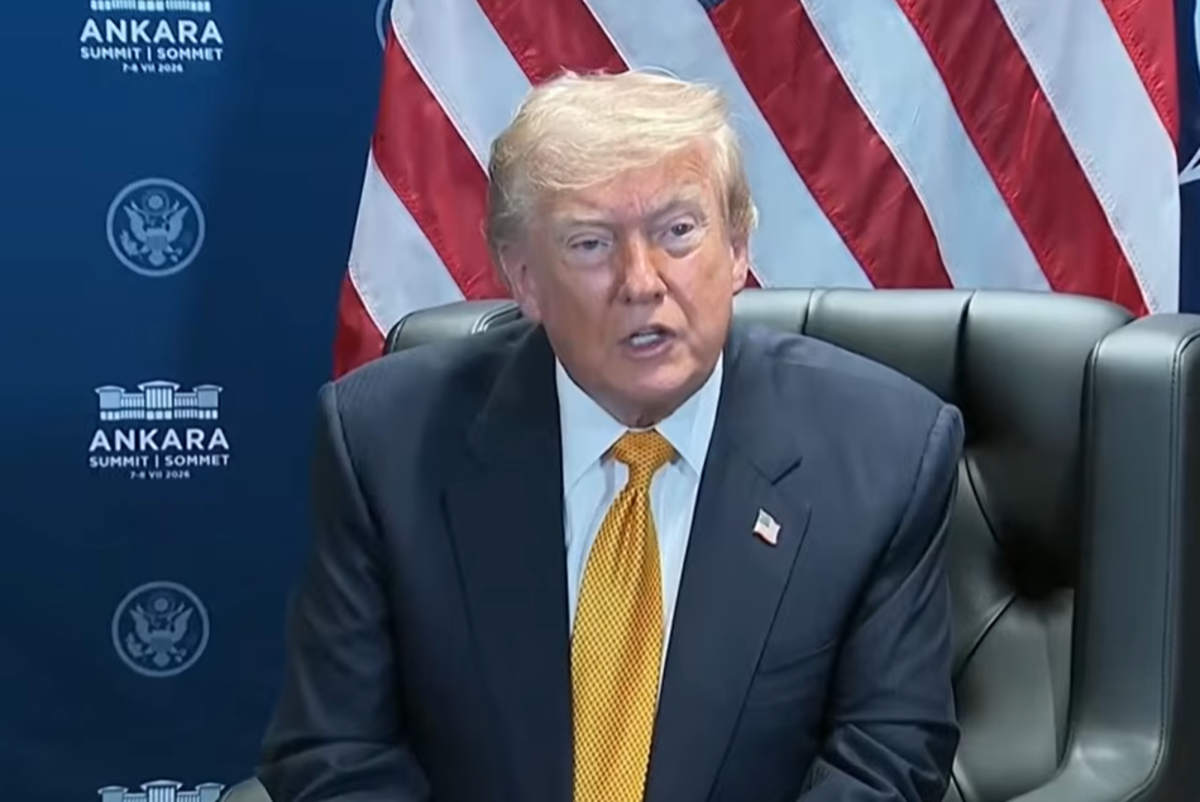
President Trump has announced a legislative proposal titled the “No Invasion of Our Country Act”, which would make it illegal for future administrations to alter border policies. The legislation was announced on Wednesday night, during a two-hour long address at the Republican midterm convention in Dallas. The legislation imposes strict immigration measures that make it a violation of the law if future presidents alter current border enforcement mechanisms.
Opening the borders in the future will be a violation of the law
When Trump assumed office in January 2025, he issued an executive border declaring that the southern border crisis was an invasion. The long-standing tensions at the United States-Mexico border had resulted in a high volume of migrants entering the country. President Trump intended to halt this. However, since executive orders can be undone by future administrations, there was a need to codify these policies into federal law.
By making border restrictions enshrined in statues, a future president will be unable to undo them through executive orders. Therefore, if a future president relaxes border restrictions, he may be subject to legal action by conservative states. It could also potentially lead to impeachment if a president refuses to adhere to federal law.
The bill is currently a proposal. To be formally enacted into law, it would need to be passed by a majority in both the House and the Senate, and signed by the President.
Trump: "We will make it legally impossible for any future president to destroy our country by having the right to open our border again. We will pass a No Invasion of Our Country Act." pic.twitter.com/Q475kHGOvk
— TheBlaze (@theblaze) September 10, 2026
Political reactions and implications
The proposed law is likely to have structural effects on the country’s immigration policies. Republicans justified the legislation by emphasizing that it would secure the borders permanently, and prevent shifts being introduced every four years. House Judiciary Chair Jim Jordan further stated that such a law is required to block future administrations from willfully opening borders. It is being viewed by Republicans through the lens of national security.
On the other hand, Democrats argue that this hardline stance adversely impacts migrants. It could cause a humanitarian crisis by taking away legitimate asylum rights and hampering standard legal processing. They further argue that measures such as these turn federal government into a police state.
By characterizing migration to ‘invasion’, the bill delves into wartime powers and sets a dangerous precedent. Under Article I, Section 10 of the Constitution, states are prohibited from exercising wartime measures under normal circumstances. Laws such as this could prompt states to exercise autonomous legal authority, deploy state National Guard units, or launch operations without needing congressional assent.
International backlash
The United Nations has condemned implications for human rights of President Trump’s current border management. In September 2026, the UN human rights chief explicitly warned the United States to cease aggressive deportations. This followed reports of 23 individuals dying in US immigration custody. As a response, the US State Department officially boycotted the International Migration Review Forum. The current administration has also accused the UN of facilitating the invasion.
Watchdogs argue that the US is violating principles of international humanitarian law and the 1951 Refugee Convention. By equating migration to invasion, the policy strips away the rights of individuals who seek asylum upon crossing a border. It also poses challenges in Latin America, where buffer states are forced to house stranded migrants amid aggressive policies.
Political analysts fear that the same attitudes might also be adopted by European powers. In his recent address, President Trump criticized European states for continuing to allow migrants to strain their economies. Therefore, the bill threatens to completely dismantle the global approach to migration that has existed since World War II.







That would be great. However, does anyone think Barack Obama would’ve followed that law.