Knoxville’s municipal network, KUB Fiber, shook up local broadband in May 2026 with a $65-a-month gigabit plan. Yet as of April 2026 the build reaches only about half the city—roughly 84,000 electric customers, according to Yahoo News. That gap leaves tens of thousands still looking for fast, reliable service. We dug into speed tests, coverage maps, and real bills to rank seven strong alternatives so you can match the right connection to your address and budget.
How we ranked Knoxville ISPs
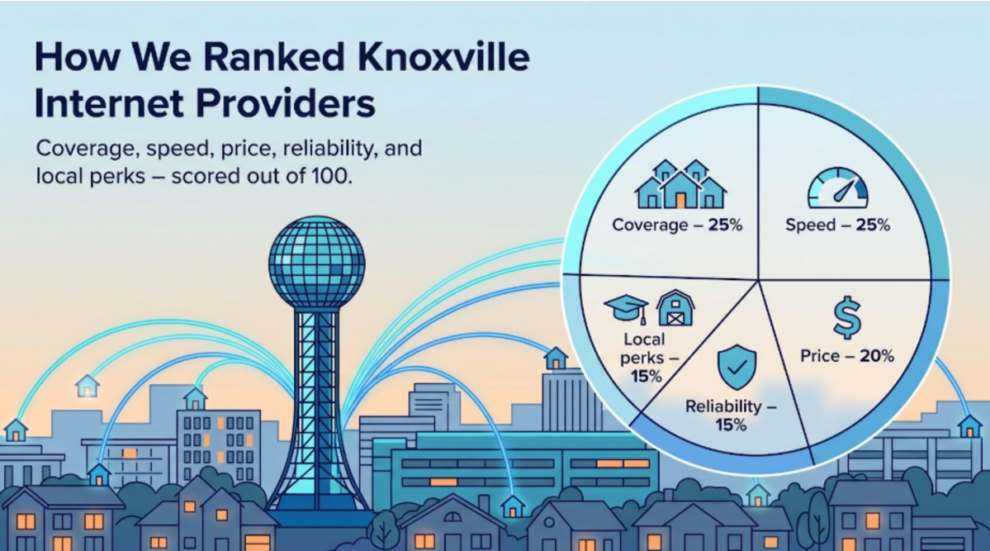
Choosing an internet plan can feel like alphabet soup, so we built a clear scorecard before we ranked anyone.
Coverage comes first. We asked, How many homes can order the service today? That reach makes up 25 percent of every score because a high-speed network is worthless if it stops a street away.
Speed and real-world performance earn another 25 percent. We checked each provider’s gigabit tier, then verified crowd-sourced speed tests after dinner when traffic peaks.
Price counts for 20 percent. We compared cost per megabit, noted whether equipment and data are included, and awarded bonus points for unlimited data, contract-free billing, and autopay discounts.
Reliability and customer satisfaction make up 15 percent. We dug into outage trackers, J.D. Power studies, and Knoxville Reddit threads to see how stable each network feels day to day.
The final 15 percent covers Knoxville-specific perks: rural reach, student deals, and low-income internet programs.
We tallied everything for a composite score out of 100, giving you a data-driven, apples-to-apples ranking you can trust.
Quick look at Knoxville’s high-speed options
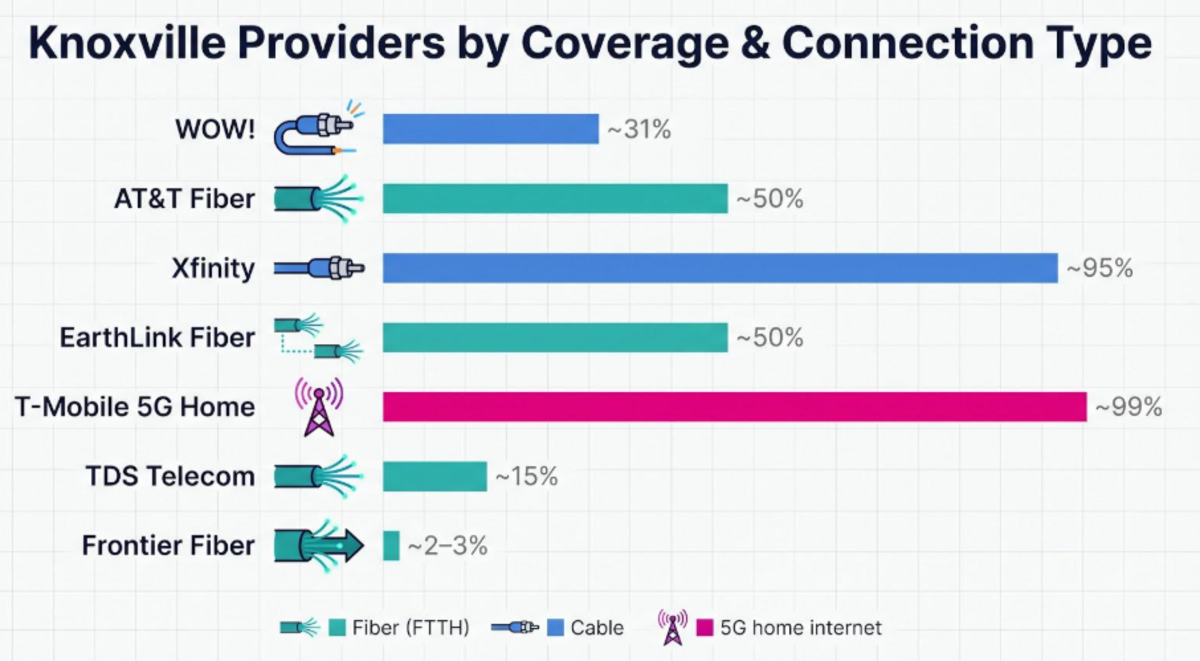
Sometimes you just need the facts in one place. The table below lists each provider’s connection type, top speeds, Knoxville footprint, entry price, contract terms, and any data cap. Scan it, circle the names that reach your street, then keep reading for the deeper dive.
| Provider | Connection | Max speed | City coverage |
| WOW! | Cable / limited fiber | 1.2 Gbps ↓ / 50 Mbps ↑ (2 Gbps available on some nodes) | ~31 percent |
| AT&T Fiber | Fiber to the home | 5 Gbps ↓ ↑ | ~50 percent |
| Xfinity | Cable (DOCSIS 3.1) | 2 Gbps ↓ / 200–300 Mbps ↑ | ~95 percent |
| EarthLink Fiber | Fiber (on AT&T lines) | 5 Gbps ↓ ↑ | ~50 percent |
| T-Mobile 5G Home | Fixed wireless | 300 Mbps typical ↓ | ~99 percent |
| TDS Telecom | Fiber (select suburbs) | 1 Gbps ↓ ↑ | ~15 percent |
| Frontier Fiber | Fiber (pockets) | 7 Gbps ↓ ↑ | ~2–3 percent |
Prices reflect everyday rates in May 2026, before taxes and fees. Promotional discounts or bundle extras change often, so confirm the latest offer when you order.
Up next, we’ll break down each provider in rank order and show where they shine, and where they stumble, so you can choose with confidence for your home office, streaming setup, or game room.
1. WOW! Internet – best value alternative to KUB Fiber
WOW! Internet Knoxville TN high-speed plans – official page screenshot
WOW! often flies under the radar, yet its straightforward pricing and unlimited data make the service appealing wherever the lines reach. The company upgraded its Knoxville coax network to DOCSIS 3.1, so most customers see up to 1.2 Gbps down and a steady 50 Mbps up. In 2025 WOW! added a 2 Gbps tier on the busiest nodes, giving cable users a lower-cost path to multi-gig speed.
Coverage is the catch. WOW! reaches about one-third of the city, including North Knoxville, parts of Bearden, and sections of Cedar Bluff. If you are inside the footprint, your budget benefits: the 300 Mbps plan sits near $40, gigabit hovers around $70, and every tier arrives contract-free with no data cap or “network management” fees. WOW!’s Knoxville, TN High Speed Internet Services page even touts a Price Lock For Life, meaning that $40 starter rate won’t creep up as long as you stick with the same speed tier.
Performance holds up in everyday use. Speed tests during prime time usually stay above 900 Mbps, and ping times measure in the teens, which supports Fortnite nights and glitch-free Teams calls. Uploads, capped at 50 Mbps on coax, remain the lone pain point for creators who send large files to the cloud.
Why WOW! tops our list
- Delivers true gigabit-class service for less money than most fiber providers.
- Unlimited data lets you stream and game without rationing.
- Month-to-month billing keeps you free to move when another fiber build reaches your block.
2. AT&T Fiber – best overall speeds and coverage
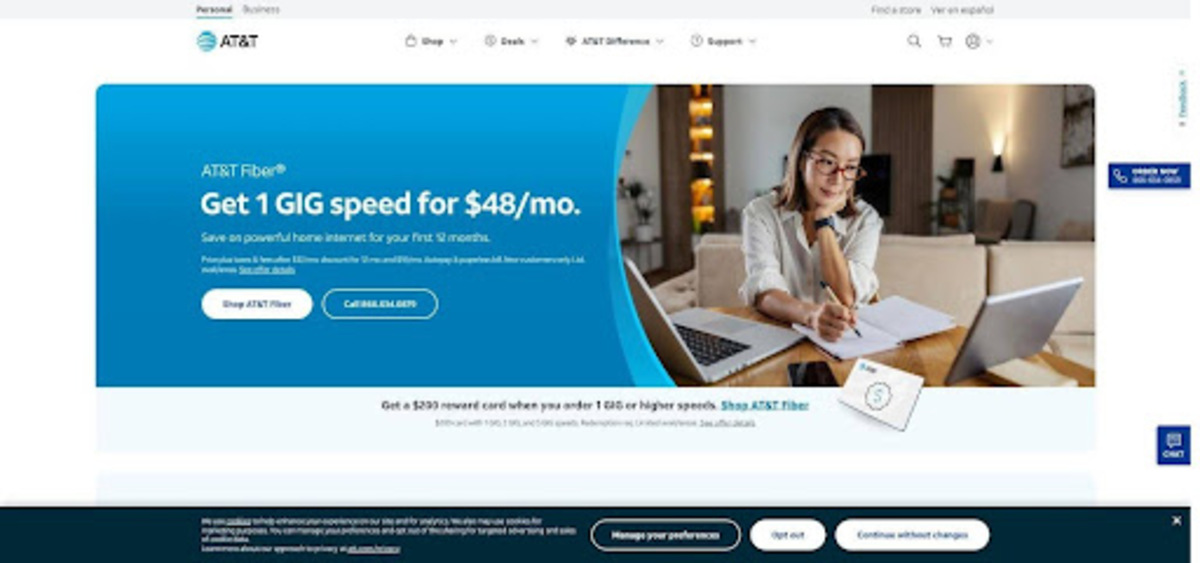
AT&T Fiber internet plans – official fiber offers page
If you want fiber that just works across most of Knoxville, AT&T is the safe bet. The build already reaches about one-half of homes, covering everything from downtown lofts to cul-de-sacs in Hardin Valley.
Performance is the headline. The entry tier delivers a symmetrical 300 Mbps. Step up to the popular gigabit plan and you will see around 940 Mbps in both directions, while multi-gig fans can choose 2 Gbps or even 5 Gbps. Latency stays under 5 ms, so Zoom calls stay crisp and gaming inputs feel instant.
Pricing is clear. A gigabit line runs about $80 per month with autopay. That rate stays flat after 12 months and includes the Wi-Fi gateway plus unlimited data. No contract means you can leave at any time, yet most users stay because the bill stays predictable.
Support also scores above average. AT&T led the South region in J.D. Power’s 2023 satisfaction study, and locals back that up with Reddit speed-test screenshots that peg uploads at the promised mark. The MyAT&T app lets you reboot the gateway or book a technician without waiting on hold.
The main drawbacks are longer install windows during peak season and the occasional hiccup with promo gift cards. For pure reach and dependable symmetrical speed, though, AT&T Fiber sets the yardstick other providers measure against.
Why AT&T earns the coverage crown
- City-wide fiber footprint means odds are high it serves your block.
- Symmetrical multi-gig plans handle large uploads, cloud backups, and 4K livestreams.
- Flat, contract-free pricing keeps budgeting painless.
3. Xfinity – widest availability and strong download punch
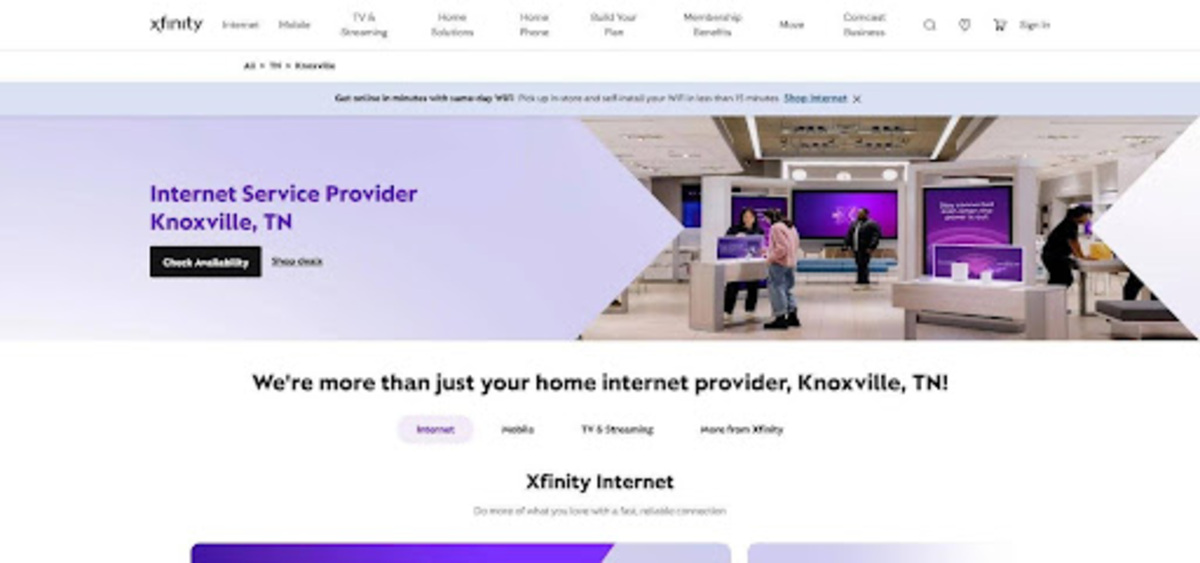
Xfinity home internet in Knoxville TN – local offers page screenshot
Walk down almost any Knoxville street and you can connect to Comcast’s Xfinity network. Coverage reaches roughly 95 percent, making Xfinity the fallback whenever fiber has not arrived or construction crews skip a cul-de-sac.
On pure download speed, cable now keeps pace. The latest Gigabit Extra tier delivers up to 2 Gbps down, and mid-split upgrades push uploads into the 100 to 300 Mbps range. Latency stays gamer friendly, usually 10 to 20 ms, although jitter can rise during prime-time streaming.
Pricing is a mixed bag. Promo offers start at $25 for 200 Mbps, but most require a 12-month contract. After the introductory period, a gig plan often climbs toward $90. Equipment adds about $14 unless you bring your own modem. The largest limitation is the 1.2 TB monthly data cap. Exceed it and overage fees add up quickly, or pay $30 each month for unlimited data.
Still, Xfinity delivers three perks fiber cannot always match today: near-ubiquitous reach, self-install kits that work within minutes, and optional TV or mobile bundles that trim a few dollars off the total bill.
Where Xfinity excels
- Almost universal Knoxville coverage, so it is the default choice in fiber deserts.
- Fast 1 to 2 Gbps downloads for large game patches or 4K movie marathons.
- Vast public hotspot network keeps you connected around town.
Keep an eye on the contract end date and the data meter, or that “cheap” plan can become the most expensive line on the block.
4. EarthLink Fiber – locked-in pricing and human support
Think of EarthLink as AT&T Fiber wearing a different jersey. The company leases the same fiber lines, so you get identical performance with symmetrical speeds up to 5 Gbps, latency under 5 ms, and dependable uptime. The twist lies in the bill and the customer experience.
EarthLink’s headline promise is no price hikes. Sign a 12-month agreement and the introductory rate stays put. Gig EarthLink Fiber plan is priced at $44.95 for 6 months, or $64.95 for 12 months.
Support is another differentiator. EarthLink staffs U.S.-based reps who answer quickly and know Knoxville’s streets. Reddit users praise the “real person on the first ring” feel, a welcome break from chat bots at larger carriers.
The trade-offs are manageable. You pay a $24.95 installation fee and a small shipping charge for the gateway. The 12-month contract also carries a steep early-termination fee, so renters and students should weigh flexibility against rate security.
Why EarthLink lands in our top five
- Same fiber horsepower as AT&T, with a rate that remains steady.
- Live, stateside support keeps troubleshooting painless.
- Ideal for homeowners planning to stay, and avoid bill creep.
5. 5G home internet – low-cost, no-contract wireless
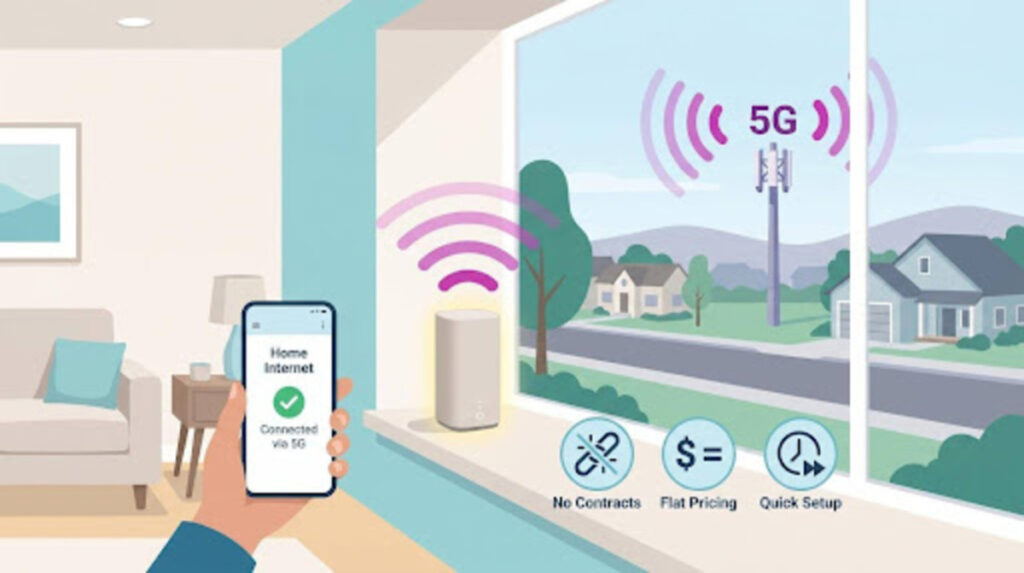
Cable trenches and fiber drops are not your only path to broadband. T-Mobile and Verizon deliver internet from 5G cell towers to a plug-and-play modem on your windowsill. Coverage is broad: T-Mobile’s mid-band 5G reaches nearly the entire city, and Verizon’s Ultra Wideband serves most dense neighborhoods, so you can often get a signal even where fiber crews have not arrived.
Everyday speeds land between 100 and 300 Mbps down, with uploads around 15 to 50 Mbps. That is plenty for Netflix, Zoom, and casual gaming, though not the symmetrical gigabit power creators need. Latency ranges from 30 to 50 milliseconds, suitable for most online activities.
Pricing stays simple. Each carrier charges $50 flat, or as low as $25 if you already have an unlimited mobile plan. Equipment, taxes, and data are included. No contracts, no caps, and a 15-day test drive let you confirm the signal in your living room.
Trade-offs exist. Busy towers can slow speeds during evening hours, and brick or basement walls may weaken the signal, so window placement matters. Still, for renters, students, or anyone waiting on a fiber drop, 5G home internet provides solid broadband within minutes of opening the box.
Why 5G home internet earns a spot in our top seven
- City-wide availability with same-day self-install.
- All-in pricing that beats most wired plans.
- Useful as a backup or interim service while you wait for fiber.
6. TDS Telecom – fiber pockets in West Knox and Farragut
TDS operates like a hidden bonus round in Knoxville’s internet landscape. Its fiber footprint covers about 15 percent of addresses, mostly in newer subdivisions west of the city and in parts of Farragut. If your street lights up on the TDS map, you can order a symmetrical gigabit line that stacks up well against larger providers.
Plans begin near $50 for 300 Mbps and rise to about $65 for a full gig. Billing stays month to month, and all fiber tiers include unlimited data. Latency matches any FTTH service, often in the single-digit range, and speed tests show downloads and uploads landing at the promised levels.
Because TDS serves a small slice of town, support feels personal. Subscribers mention quick installs, local technicians who remember names, and a support line that rings an office in Tennessee instead of an overseas call center.
Availability is the clear drawback. Move two streets over and you may fall back to legacy DSL, which tops out at 25 Mbps and rarely justifies the price. Equipment rental also adds about $10 a month unless you bring your own Wi-Fi 6 router.
Why TDS earns an honorable slot
- True fiber with symmetrical gig speeds, and no contracts.
- Localized support that resolves issues quickly.
- A fortunate option for homeowners in its limited West Knox zones.
7. Frontier Fiber – limited footprint, serious speed
Frontier finishes our list because its footprint covers only about three percent of Knoxville addresses, yet its service delivers premium performance. In the slivers of North and East Knox where the telco replaced old copper with XGS-PON fiber, residents can order 500 Mbps, 1 Gbps, or even 7 Gbps symmetrical service with latency near 5 ms.
Pricing follows national promos: $50 for 500 Mbps and $80 for a gig, equipment included, no contract, and no data cap. Frontier also offers multi-year price guarantees, so the rate stays steady into year two.
Because the network is newly built, congestion is minimal. Speed tests match the advertised numbers during dinner time, and outages are rare. Local sentiment has shifted from “avoid Frontier DSL” to “the new fiber performs well.” Old customer-support frustrations do linger, and reaching the right representative can take patience.
If Frontier Fiber is available at your address, compare it directly with AT&T and KUB. The speeds and terms align, and in some neighborhoods Frontier is the only gig-plus option on the pole.
Why Frontier deserves a mention
- Multi-gig fiber in pockets other ISPs skip.
- No contracts, and long price locks provide billing stability.
- Under-loaded network delivers consistent peak-hour performance.
Frequently asked questions
Is fiber available everywhere in Knoxville?
Not yet. About three quarters of homes can order at least one fiber service today, thanks to KUB, AT&T, and several smaller builds. Pockets along the county line and some older neighborhoods still rely on cable or 5G while crews install new glass. Check your exact address, because coverage can change from block to block.
Which provider is fastest right now?
KUB offers the top residential speed with a 10-gig plan, but only in areas the utility has finished wiring. Frontier reaches 7 Gbps, AT&T tops out at 5 Gbps, and Xfinity’s newest cable tier delivers 2 Gbps down. For most households, any symmetrical gigabit fiber connection feels fast.
Who has the cheapest plan?
On paper, Xfinity’s 200 Mbps promo at $25 looks attractive, yet the rate jumps after 12 months and the data cap still applies. T-Mobile’s 5G Home service costs $50 flat for 500 Mbps, taxes and equipment included. If you need gigabit speed, KUB’s $65 plan is the lowest everyday rate in town.
I work from home. Should I prioritize upload speed?
Yes. Video calls, cloud backups, and large file transfers rely on upstream bandwidth. Fiber delivers the same speed in both directions, so a 1 Gbps fiber plan can provide up to 35 times the upload of a cable gigabit tier. If you create or share large files, choose fiber whenever possible.
Does Knoxville still have data caps?
Only on cable. Xfinity enforces a 1.2 TB monthly limit on standard plans. If you exceed it, you pay $10 for each extra 50 GB, up to $100. All Knoxville fiber providers, plus both 5G home services, include unlimited data.
Can I keep my existing Wi-Fi gear?
Often. AT&T, KUB, and WOW! bundle a gateway but allow bridge mode if you prefer your own mesh system. Cable modems must appear on the provider’s approved list, and 5G gateways are locked to carrier hardware but let you connect a separate router with Ethernet.
What if I move across town?
Month-to-month plans from WOW!, AT&T, and the 5G carriers transfer easily once you schedule the move. Contract plans such as EarthLink require an early-termination fee if the new address is out of range, so renters should double-check before signing.
Conclusion
KUB Fiber may be Knoxville’s headline-grabber, but the right plan still depends on which line reaches your block. WOW! delivers the cheapest gig-class option, AT&T Fiber sets the symmetrical-speed benchmark, Xfinity fills in the fiber deserts, and EarthLink, TDS, or Frontier are the hidden gems for select streets. Renters and rural addresses can lean on T-Mobile or Verizon 5G Home as a same-day fix. Plug your address into each provider’s checker, weigh upload needs against contract terms, and pick the connection that matches how your household actually uses the internet.

Add Comment