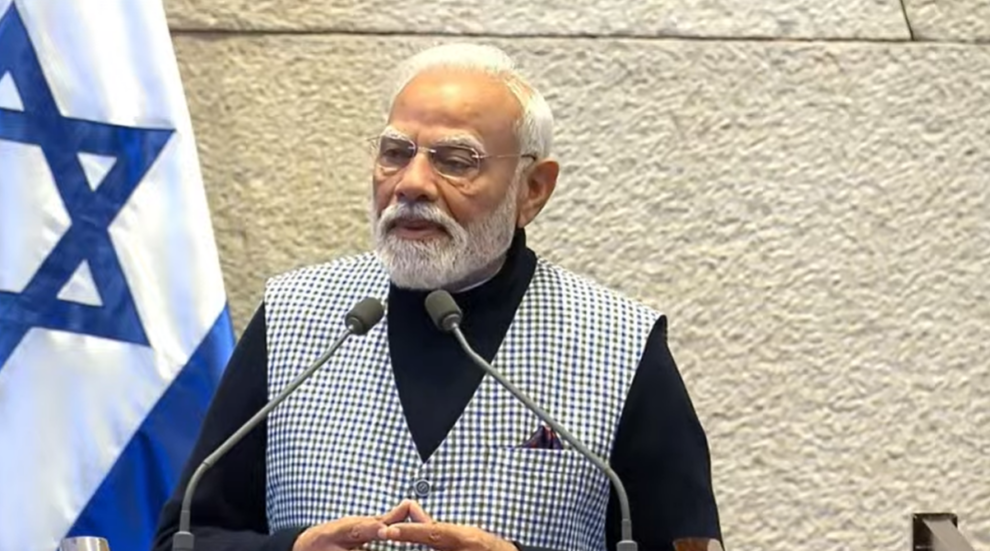
Indian Prime Minister Narendra Modi said Thursday he is pushing a bill to fast-track a law guaranteeing at least one-third of lawmakers are women, and potentially expanding seats by two-fifths.
If passed, the measure would sharply increase the number of women candidates and elected representatives, potentially reshaping legislative debates and policy priorities.
Modi said that parliament will hold a special session on April 16 “to discuss and pass an important bill that advances women’s reservation”.
The bill proposes fast-tracking implementation of a 2023 law in the world’s largest democracy, reserving 33 percent of seats for women both in the national parliament and state assemblies.
Currently, the number of elected women is just 14 percent in India’s Lok Sabha, the lower house of parliament, or 75 out of 543 seats.
“Society progresses when women progress,” Modi said in a statement.
“Yet, their representation in the world of politics and legislative bodies has not always been commensurate with their role in society,” he added.
“This is particularly unfortunate because when women participate in administration and decision-making, they bring with them experiences and insights that enrich public discourse and improve the quality of governance.”
The rollout of the 2023 law was stalled pending census data, delayed in 2021 by the Covid-19 pandemic, which was needed to delimit constituency boundaries.
India finally launched its first census in 15 years this month.
But the formidable logistical challenge will take more than three million officials a year to carry out — and even longer for the data to be processed — meaning implementation of law could be delayed beyond the next general election in 2029.
The government is proposing that delimitation be based on the last completed census, in 2011.
Indian newspapers report that the amendments could raise the number of seats in parliament’s lower house from 543 to 816.

Add Comment