There is an unspoken agreement among pet owners: we accept a certain level of chaos in exchange for unconditional love. We trade pristine sofas for cuddles and accept that black clothing is now a magnet for golden fur. However, there is a fine line between a “lived-in” home and one that feels overwhelmed by pet hygiene issues.
For years, the standard advice for pet owners was simply “clean more often.” But anyone with a shedding Husky or a mud-loving Golden Retriever knows that manual cleaning cannot keep pace with the biology of a pet. Fur falls 24/7. Mud tracks in instantly. Water bowls are splashed hourly.
To maintain a sanitary home without spending your entire life with a broom in hand, you need to stop thinking about “cleaning tools” and start building a “defense system.” This system requires two distinct players: a relentless autonomous maintainer and a heavy-duty disaster specialist.
The First Line of Defense: Managing the “Shedding Clock”
The biggest battle for pet owners is not the mud—it is the fur. Shedding is a constant process. If you vacuum on Saturday, by Monday morning, “tumbleweeds” of hair are already gathering under the credenza.
The problem with traditional vacuuming is that it is reactive. You wait until the floor looks furry, then you clean it. By then, dander has already settled into the upholstery and air.
The solution is to shift from reactive cleaning to proactive maintenance using automation. This is where a vacuum and mop combo becomes essential. The primary value of a robot in a pet household is not its power, but its persistence. By scheduling the device to run every single day while you are at work, you interrupt the shedding cycle.
A high-quality combo device doesn’t just suck up loose hair; it traps fine dander and wipes away the “nose art” and paw smudges on hard floors before they set in. This daily reset ensures that allergens are removed before they have a chance to bond to the floor or become airborne. It changes the baseline cleanliness of the home so that you are never walking into a “furry” situation at the end of the day.
The Heavy Artillery: Handling Wet and Sticky Disasters
While the robot handles the dry, daily maintenance, pet owners know that the real stress comes from the wet messes.
Standard vacuums have a fatal flaw: moisture. If your dog tips over a water bowl, tracks in slushy snow, or has a digestive accident on the rug, a standard vacuum is useless—and potentially dangerous if water enters the motor. Conversely, using a traditional mop on these messes is often gross; you end up smearing the mess around and then have to hand-wash a filthy mop head.
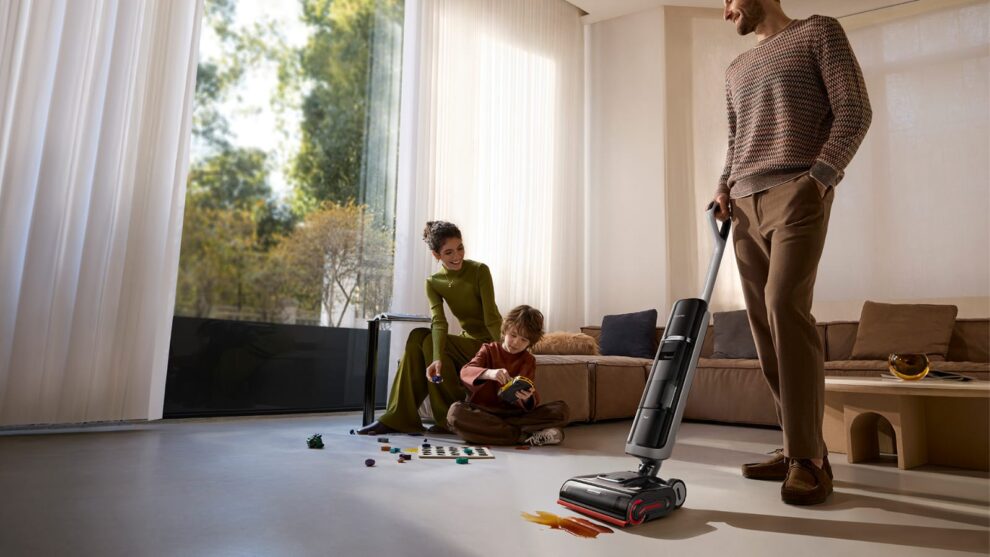
This is the gap that a dedicated wet dry vacuum cleaner fills. Unlike a robot or a standard stick vac, a wet/dry unit is designed to inhale liquids and solids simultaneously.
Imagine a bowl of kibble mixed with milk spills onto the kitchen tiles. With a wet/dry vacuum, you don’t need a paper towel first. You simply run the machine over the pile. It sucks up the soggy food and the liquid while simultaneously scrubbing the floor with fresh water and detergent. The dirty water is sequestered in a separate tank, ensuring you never cross-contaminate the floor.
For puppy training or aging pets, this tool is a psychological lifesaver. It turns a stressful, smelly cleanup event into a 30-second fix, removing the odor-causing bacteria rather than masking it.
The “Zone Defense” Strategy
To truly win the war on pet mess, you need to deploy these tools in a “Zone Defense” strategy.
Zone 1: The Open Floor (The Robot’s Domain) The large, open areas of your home—living rooms, hallways, and dining areas—are where hair accumulates most. Your robot vacuum/mop combo should own this zone.
- Tip: Set your robot to run at 10:00 AM after the morning chaos has settled. This captures the morning shed and the post-breakfast crumbs.
Zone 2: The Entryway and Feeding Station (The Wet/Dry Domain) The back door and the kitchen corner where the bowls live are “high-risk” zones. These areas require torque and suction, not just dusting.
- Tip: Keep your wet/dry vacuum charged and accessible near the kitchen or mudroom. When the dog comes in from the rain, a quick 60-second pass with the wet/dry vac cleans the muddy prints instantly, preventing them from drying and requiring scrubbing later.
Hygiene Beyond Aesthetics
Ultimately, this multi-device approach is about health. Pets walk on city sidewalks, in dirt, and sometimes in worse things, and then track that microbiome into our homes.
A robot helps reduce the overall bacterial load by removing the medium (dust and organic matter) that bacteria feed on. The wet/dry vacuum provides the deep sanitation needed to physically remove sticky grime and germ-laden spills.
By investing in both, you are buying peace of mind. You no longer have to worry about guests sitting on a fur-covered floor or stepping in a wet spot. You can get back to doing what matters most: playing with your pet, rather than cleaning up after them.

Add Comment