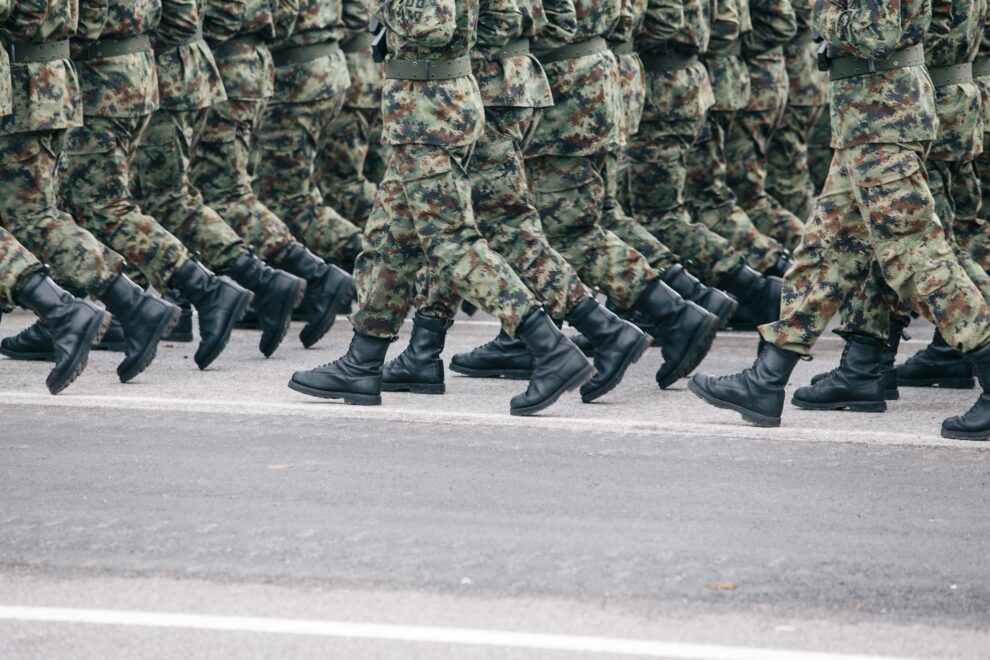
German lawmakers backed a new scheme for military service on Friday as the country seeks to bolster its long ill-equipped and understaffed armed forces following Russia’s invasion of Ukraine.
The reform stops short of introducing conscription but will include mandatory screening of all 18-year-old men and measures such as higher pay aimed at making service more attractive.
Conservative Chancellor Friedrich Merz says he wants Germany to have Europe’s strongest conventional army, at a time when the Trump administration has questioned its commitment to defending its traditional European allies.
NATO targets call for Germany to eventually boast a total military strength of 460,000 — made up of 260,000 active soldiers and 200,000 reservists.
The Bundeswehr is currently far from those figures, with around only 182,000 active soldiers and about 49,000 reservists.
Defence Minister Boris Pistorius of the centre-left Social Democrats (SPD) had urged MPs to back the law, saying it was a “decisive step for our ability to defend ourselves”.
“Our allies are looking to us,” he added.
The law was approved by 323 MPs, with 272 voting against and one abstention. It will now progress to the upper house, which is expected to sign off on it before Christmas.
The plans had caused a row within Merz’s coalition, with some in his own CDU/CSU conservative alliance demanding a quicker return to conscription, while Pistorius and the SPD advocated a voluntary model — at least for now.
Pistorius told MPs that if the new measures fail to draw enough recruits then parliament would have to discuss at least a partial reintroduction of conscription.
Both the far-right Alternative for Germany (AfD) and the far-left Die Linke opposed the law.
AfD MP Heinrich Koch said there was a widespread “fear that our children will be sent to conflicts outside our borders”, for example in Ukraine.
The government has denied that its plans would force anyone into active service abroad.
“Young people have other plans than serving in a ‘Merz regiment’ to protect the capital of the rich,” said Desiree Becker from Die Linke, pointing to anti-conscription protests outside parliament.
This year, the defence ministry expects about 15,000 new recruits, 5,000 more than last year.
By 2031, the government hopes to nearly triple the number of new volunteers each year to 40,000.

Add Comment