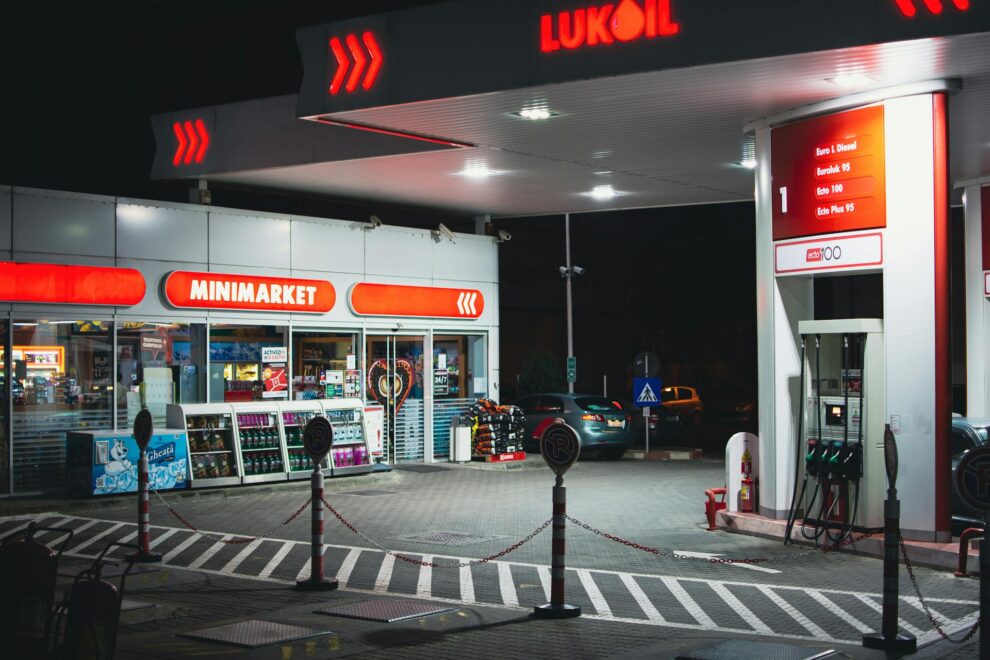
Germany and France are pushing to target Russian oil giant Lukoil as part of a new round of EU sanctions over the war in Ukraine, diplomats said Monday.
The proposal comes as the 27-nation bloc is trying to coordinate with the United States on moves to ramp up pressure on Moscow, as the Kremlin stalls on President Donald Trump’s peace efforts.
The EU’s executive, the European Commission, is currently consulting EU member states as its prepares its 19th package of sanctions on Russia since the 2022 invasion.
In a joint proposal circulated last week, economic powerhouses Germany and France suggested blacklisting privately-owned oil major Lukoil and its trading subsidiary Litasco, diplomats said, speaking on condition of anonymity.
The duo are also pressing to target refineries in third countries involved in exporting Russian oil to the EU and trading firms dealing with Russian oil, diplomats said.
There was also a call to ratchet up sanctions on firms outside Russia involved in helping Moscow to circumvent sanctions, including curbs on more banks, and targeting cryptocurrency schemes in Central Asia.
EU officials say that the sanctions discussion is still at an early stage and that it remains to be seen which suggestions make it into the commission’s final proposal.
The sanctions would need the backing of all 27 EU countries and there would likely be strong opposition from Moscow-friendly Hungary to hitting Lukoil.
The EU’s sanctions envoy was holding talks Monday with the United States, with Washington’s European allies hoping to convince Trump to make good on threats to sanction Russia.
Trump threatened more sanctions on Russia on Sunday, after the Kremlin unleashed its biggest-ever aerial barrage on Ukraine.
US Treasury Secretary Scott Bessent said Washington was prepared to “increase pressure” on Russia, but that Europe must also act to truly force Moscow to the negotiating table.
Trump has threatened to penalise countries that buy Russia’s oil, seeking to cut off a key funding source for Russian leader Vladimir Putin’s war, but has so far only hit India with such so-called secondary sanctions.
In its last package of measures the EU targeted two Chinese banks accused of helping facilitate support for Moscow and an oil refinery in India.
But stepping up pressure on India would be politically problematic for the EU as it is looking to improve trade ties with the world’s most populous country and fears pushing it closer to Moscow and Beijing.

Add Comment