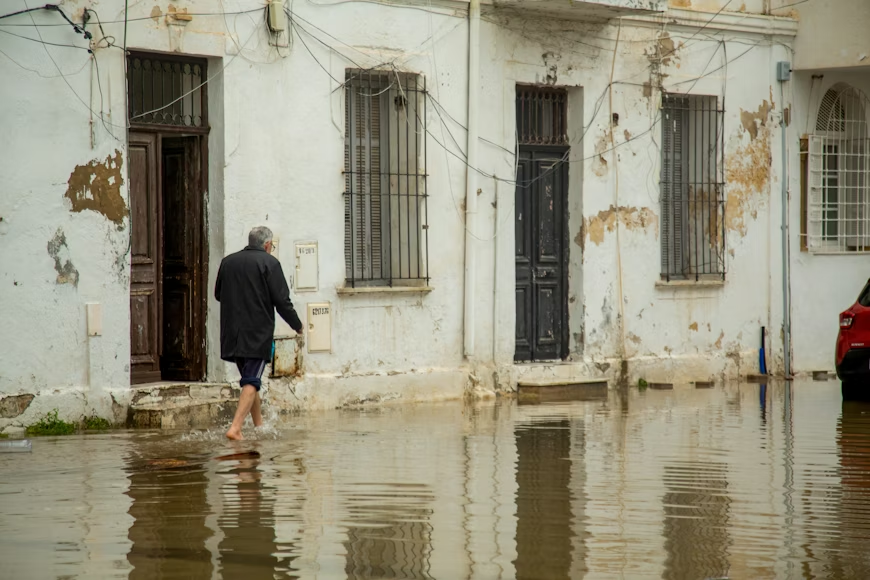
Flash floods. Heat waves. Frequent lightning. Gale force winds. It reads like a recipe for cooking up a dystopian future with all the ingredients for a best-selling novel.
Reality is overriding fiction. Extreme weather events show no mercy. The world is in fight or flight mode.
In the midst of it all, the global construction industry is facing one of its toughest challenges. How to build for tomorrow?
Urban planning and choice materials, from commercial flat roofing to reclaimed wood, are helping mitigate impacts. Yet, we’re a long way from finding sound solutions.
Extreme weather is forcing a hard reset. Construction experts are going back to the drawing board and thinking outside the box.
Climate Pressure Is Forcing a Construction Rethink
The construction sector sits at the center of the climate conversation. It contributes to emissions and is directly affected by climate impacts.
Climate change is pushing the industry to rethink materials, energy use, and design strategies from the ground up. Traditional methods are no longer enough.
At the same time, research published in New Scientist shows that staying below critical warming thresholds will require a complete switch in how homes are built.
Incremental change will not cut it. The industry needs a full reboot.
Rising Temperatures Are Changing Urban Design
Cities are heating up faster than rural areas. Dense infrastructure traps heat, creating urban heat islands. This makes buildings harder to cool and more expensive to operate.
Research shows that cities play a major role in global warming, but they also hold the key to solutions.
Smarter Materials and Reflective Surfaces
To combat rising temperatures, builders are turning to:
- Reflective roofing materials
- Better insulation systems
- Ventilated building designs
Commercial flat roof installations are gaining attention. Integrity Pro Roofing explains that modern systems are designed to reflect sunlight and reduce heat absorption. This helps keep indoor temperatures stable while lowering energy use.
Green Roofs and Cooling Strategies
Green roofs are also on the rise. They absorb heat, improve air quality, and manage stormwater. While not suitable for every structure, they are becoming a key tool in urban climate adaptation.
Extreme Rainfall Is Driving Structural Changes
Flooding is becoming more frequent in many regions. Buildings must handle more water, more often.
Improved Drainage Systems
Flat roofs, once seen as a risk in heavy rain, are being redesigned with advanced drainage systems. They move water efficiently and reduce the chance of pooling or leaks.
Buildings are no longer static structures. They are engineered systems designed to respond to environmental stress.
Elevated and Flood-Resistant Design
In flood-prone areas, developers are:
- Raising building foundations
- Using water-resistant materials
- Designing for quick water runoff
In Argentina, adaptation strategies include rethinking building layouts and materials to better handle extreme weather conditions.
Stronger Storms Demand More Durable Construction
Storm intensity is increasing. Wind, hail, and debris can cause serious damage to poorly designed structures.
Reinforced Materials and Systems
Builders are now prioritizing:
- Impact-resistant materials
- Reinforced roofing systems
- Secure structural connections
Roofing plays a critical role. Commercial flat roofing systems, when properly installed, offer durability and resistance to wind uplift. This makes them a reliable choice for large-scale buildings in storm-prone areas.
Designing for Longevity
Durability is not optional. It is a cost-saving strategy. Buildings that can withstand extreme weather require fewer repairs and have longer lifespans.
Data and Research Are Influencing Better Decisions
Research is helping the industry understand how climate risks evolve.
A study published in Nature Climate and Atmospheric Science highlights the growing complexity of climate patterns and their impact on infrastructure. These insights help guide smarter building practices.
At the same time, emerging findings show that climate-driven changes in weather patterns are accelerating faster than expected.
Predictive Design Is the Future
Rather than reacting to damage, builders are planning ahead. Predictive modeling helps:
- Identify future climate risks
- Test building performance under stress
- Optimize materials and design
The approach reduces uncertainty and improves resilience.
South Africa’s Construction Sector Is Adapting
South Africa is already seeing the effects of climate change. Heatwaves, droughts, and heavy rains are changing how buildings are designed.
Industry leaders are focusing on sustainable construction practices that address both environmental impact and viability.
Local Solutions for Local Challenges
Key strategies include:
- Energy-efficient building designs
- Water-saving systems
- Climate-responsive materials
Sustainability and Resilience Now Go Hand in Hand
In the past, sustainability focused on reducing environmental impact. Today, it also means building structures that can endure extreme conditions.
The industry is moving toward adaptive, efficient, and durable building practices.
This transformation is not optional but necessary. As climate pressures grow, buildings designed with change in mind are the ones that will last.

Add Comment