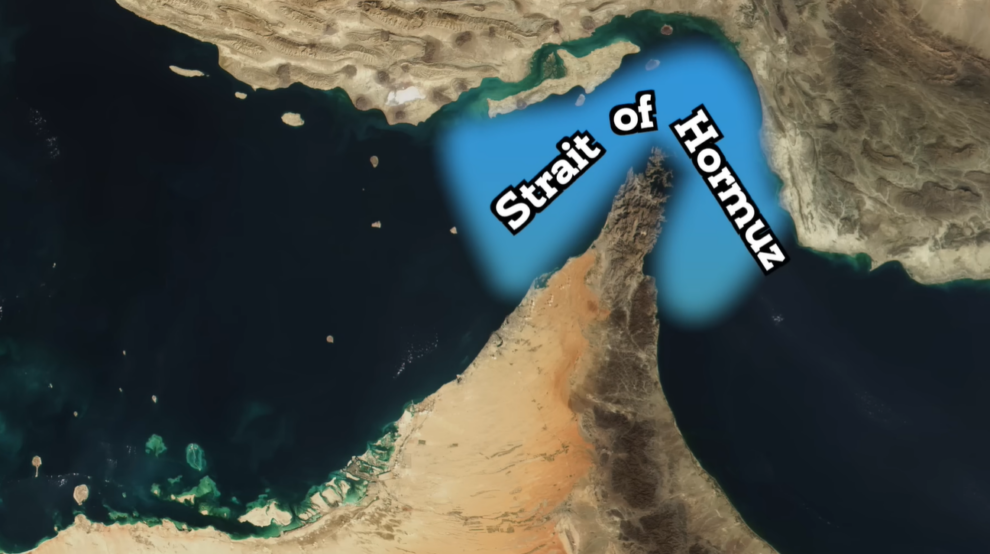
Iran’s Revolutionary Guards said Friday that they had turned back three ships trying to transit the Strait of Hormuz, adding the route was closed to vessels travelling to and from ports linked to its “enemies”.
“This morning, following the lies of the corrupt US president claiming that the Strait of Hormuz was open, three container ships of different nationalities… were turned back after a warning from the IRGC Navy,” the Guards said on their Sepah News website.
“The movement of any vessel ‘to and from’ ports of origin belonging to allies and supporters of the Zionist-American enemies, to any destination and through any corridor, is prohibited,” it added.
The move raises fresh doubt about which vessels are able to transit the strategic waterway, which is a conduit for a fifth of world oil and gas supplies in normal times, as well as other vital products.
A total of 26 ships have been approved by Iran to transit the strait recently, using a route around Larak Island just off the country’s coast, dubbed the “Tehran toll booth” by leading shipping journal Lloyd’s List.
Most were Greek- and Chinese-owned, as well as other Indian-, Pakistani- and Syrian-owned vessels, the journal said.
The new developments “suggest the situation remains highly unstable”, a data analyst at energy market intelligence firm Kpler, Rebecca Gerdes, said in a statement.
The consultancy identified two container ships belonging to Chinese firm COSCO that had attempted to cross the Strait on Friday, but had turned around.
The two vessels had been stuck in the Gulf since the start of the war, sparked by US and Israeli attacks on February 28.
The identity of the third ship referred to in the Guards statement was unknown.
– Red Sea threat –
US President Donald Trump said Thursday that Iran had allowed 10 oil tankers to pass through the Strait of Hormuz as a “present” to show it was serious about negotiations to end the war.
US and Iran have been exchanging proposals this week to end the conflict via intermediary Pakistan, but no direct talks have been confirmed.
Some analysts believe the discussions are doomed to fail, or could be a smokescreen for Trump as he prepares a ground offensive to reopen the strait by force or seize Iranian oil assets.
Thousands of US paratroopers and extra marines are heading to the region.
If attacked with ground troops, Iran has signalled it would use its Houthi allies in Yemen to target shipping in the Red Sea, which would open up a new front in a war of spiralling economic, political and military repercussions.
Abdul Malik al-Houthi, leader of the rebel movement, warned on Thursday of a “military response” should the war require it.
The Houthis greatly reduced traffic in the Red Sea and the Suez canal in October 2023 when they began attacking vessels around the narrow Bab el-Mandeb Strait in retaliation for Israel’s bombardment of Gaza.
Traffic through the Strait of Hormuz was down by 95 percent from usual in the period from March 1 to 26, according to Kpler.
Since March 1, 2026, 24 commercial vessels, including 11 tankers, have been attacked or reported incidents in the Gulf, the Strait of Hormuz or the Gulf of Oman, according to the British naval maritime security agency UKMTO.

Add Comment