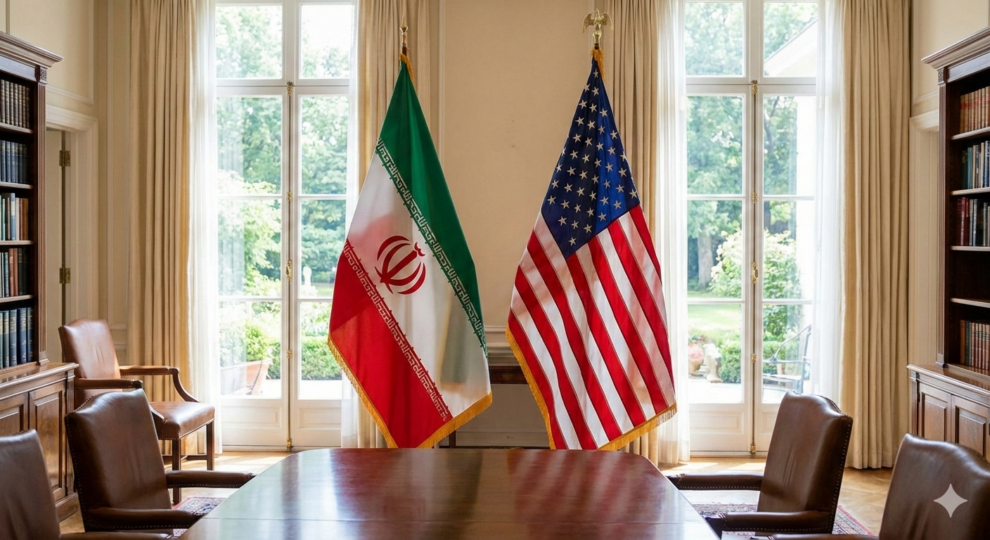
Iran’s top diplomat voiced hope Tuesday that “a new window of opportunity” seen in fresh nuclear talks with Washington would lead to a lasting solution to the two countries’ stand-off.
The Omani-mediated talks in Geneva aimed at averting the possibility of US military action, while Tehran is demanding the lifting of Washington’s sanctions, which are crippling its economy.
“A new window of opportunity has opened,” Iranian Foreign Minister Abbas Araghchi told the Conference on Disarmament in Geneva after the talks, which lasted several hours.
“We are hopeful that negotiation will lead to a sustainable and negotiated solution which can serve the interest of relevant parties and the broader region,” he said.
He insisted thought that a viable agreement “must ensure the full recognition of Iran’s legitimate rights to deliver tangible benefits, and be safeguarded against unilateral actions”.
Before the talks US President Donald Trump had warned of consequences should Tehran fail to strike a deal.
Trump has repeatedly threatened to intervene militarily: first over Iran’s deadly crackdown on protesters last month and more recently over its nuclear programme.
Araghchi stressed that “Iran remains fully prepared to defend itself against any threat or act of aggression”, and cautioned that “the consequences of any attack against Iran will not be confined to its borders”.
– IAEA talks –
The Iranian foreign minister met in Geneva on Monday with Rafael Grossi, the head of the International Atomic Energy Agency.
Araghchi said Tuesday that that meeting had focused on “cooperation between Iran and the agency (and) the role that the agency can play between Iran and the United States to achieve a mutually-agreed agreement”.
“Iran will continue its constructive dialogue and engagement with the agency to address these technical issues and to identify an agreed pathway for closing the outstanding gaps,” he said.
Araghchi insisted that his country had “consistently affirmed that it neither seeks to manufacture nor to acquire nuclear weapons, which have no place whatsoever in Iran’s national security doctrine”.
He lamented though that “despite Iran’s demonstrated commitment to diplomacy and good faith engagement, the conduct of certain Western states, most notably the United States, has seriously undermined the credibility of the negotiating process” until now.
Araghchi pointed to Washington’s withdrawal from a previous nuclear deal during Trump’s first term, warning it had “dealt a profound blow to trust and stability of multilateral obligations”.
He also highlighted the US military attack on Iran last June, while the two sides “were in the midst of negotiations”.

Add Comment