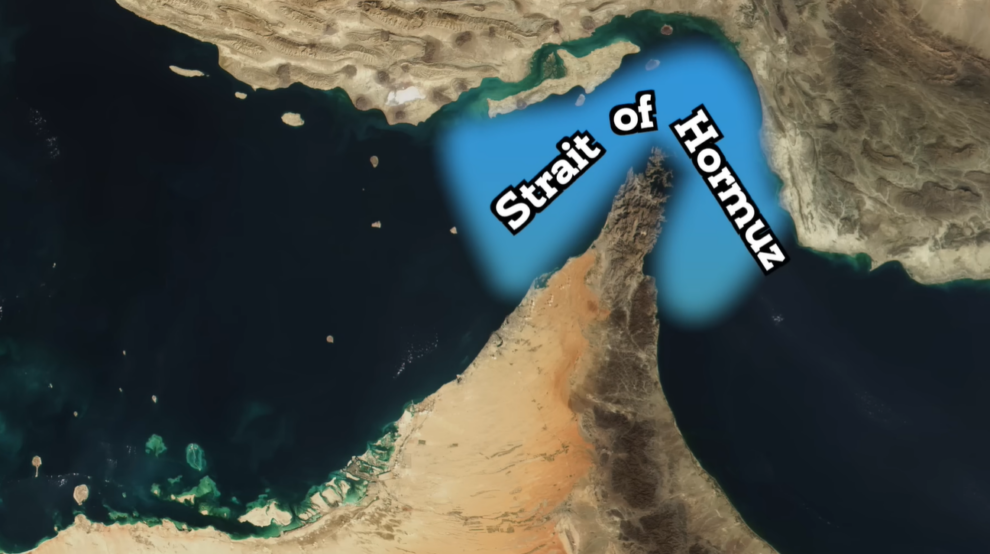
UK government officials have drawn up contingency plans for possible food shortages caused by a scarcity of carbon dioxide if the Strait of Hormuz remains severely disrupted, a report said Thursday.
A secret government analysis envisaged shortages of CO2, which is critical to the food industry, unless Iran and the United States reach an agreement to open the vital waterway, The Times daily reported.
Officials had been working through a “reasonable worst-case scenario” in an event codenamed “Exercise Turnstone”, it said.
That scenario was based on a situation in June with traffic through the strait still severely limited and no permanent peace deal in place. The food shortages were not expected to be critical.
Reacting to the report, business minister Peter Kyle said he hoped the public would be “reassured” that the government was “doing this work”.
US-Israeli strikes launched against Iran on February 28 sparked Tehran’s retaliation, virtually closing the Strait.
Shortages of CO2 could impact supplies of pork and chicken in many countries. The gas is used in the slaughter of pigs and chickens.
It is also used to boost the shelf life of salad, packaged meats and baked goods, the report said.
Breweries could be hit as they use the gas to make drinks fizzy.
But Kyle said supplies of the gas were “not a concern” for the UK at present.
“If any of these things change, I will be upfront with the public about it in advance so that we can prepare,” he told Sky News.
“But right now, people should go on as they are, enjoying beer, enjoying their meats, enjoying… salads,” he said.
Kyle said he had previously mothballed a CO2-producing plant in Teesside in northeastern England in order to prevent it shutting down completely.
After the Iran war began, he said, the government reactivated the Ensus bioethanol plant, which makes CO2 as a by-product, to shore up UK supplies of the gas.
CO2 is also used for MRI scanning, water purification and civil nuclear power, he added.

Add Comment