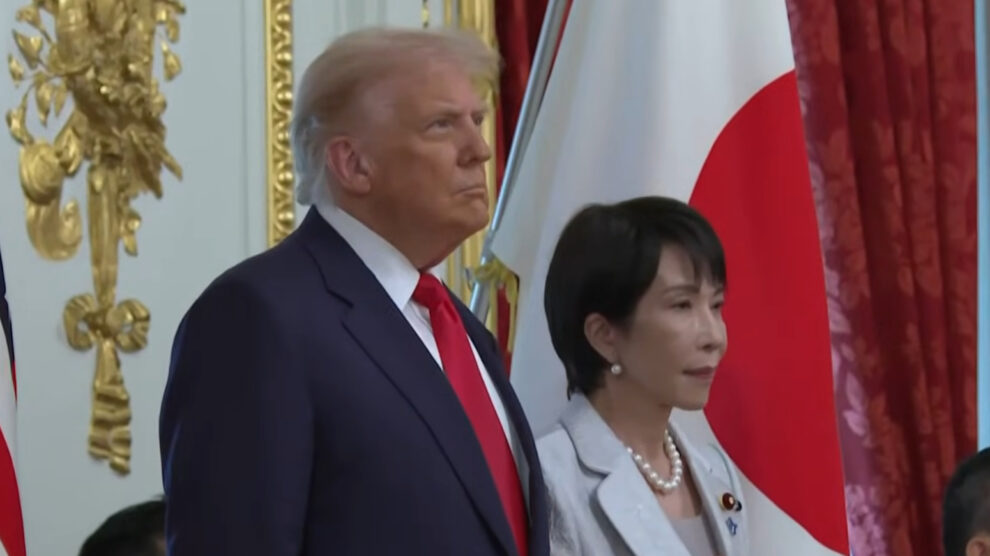
The United States on Wednesday unveiled a critical minerals partnership with the European Union and Japan, after a gathering in Washington amid growing concerns about China’s dominant role in the sector.
The partners aim to develop “coordinated trade policies and mechanisms, such as border-adjusted price floors, that can mitigate critical mineral supply chain vulnerabilities,” said the US Trade Representative’s office in a statement.
Critical minerals include rare earth metals, which are key to the production of goods like smartphones, fighter jets and electric cars.
But these resources have become a bargaining chip, particularly as major producer China introduced restrictions on rare earth exports last year, raising alarm in the United States and elsewhere.
Washington and its allies are now racing to develop alternative mining and processing supply chains.
A joint press statement by the United States, European Commission and Japanese government said Wednesday that the partners are “taking significant steps towards increasing their economic security and national security” by boosting resilience in the critical minerals sector.
“Today’s announcement is an important signal that the world’s largest market-oriented economies are committed to developing a new paradigm for preferential trade in critical minerals,” US Trade Representative Jamieson Greer said.
Their “strategic partnership” has two components. One involves the push towards a memorandum of understanding between the United States and EU to identify and support mining, refining, processing and recycling projects.
The aim is to stimulate demand and diversify supply on both sides.
Washington and Tokyo have previously signed a framework deal covering similar areas.
The other component of Wednesday’s agreement is a critical minerals “trade initiative with like-minded partners.”
This could include the development of price floors, price gap subsidies and other elements.
On Wednesday, Greer separately announced a US-Mexico cooperation plan on critical minerals too, which includes exploring how price floors may be worked into future trade agreements.

Add Comment