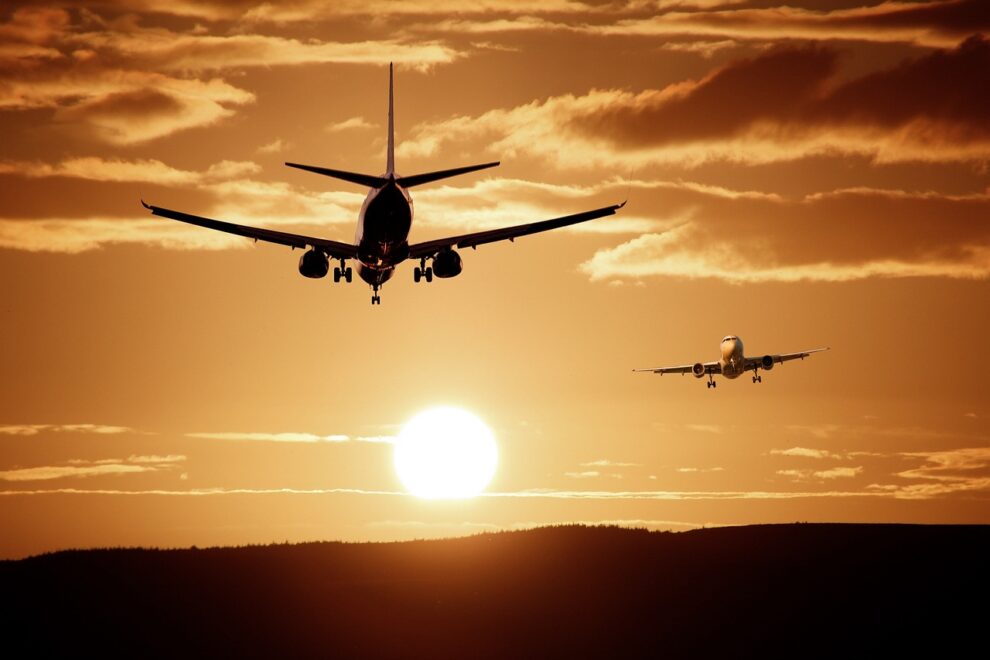
The deadly Boeing plane crash in South Korea which killed 179 people on board was initially blamed on a bird collision, a stark reminder of how such incidents are often the cause of aviation accidents around the world.
Officials had initially cited a bird strike as a likely cause of Sunday’s crash of the Jeju Air plane, though Seoul said Monday it was conducting a special inspection of all 101 Boeing 737-800s operating in South Korea.
Whatever the cause of Sunday’s crash, aviation authorities around the world appear to be recording more bird collision incidents as air traffic grows.
In the United States alone, 17,190 bird strikes were recorded in 2022, according to a database set up by the Federal Aviation Administration (FAA).
That was up 10 percent on 2021’s figure, in line with increased air traffic following the Covid-19 pandemic.
Collisions in the United States between wild animals and civil aircraft totalled 291,600 between 1990 and 2023, according to the same records.
In mainland France, the Civil Aviation Authority records 600 each year during commercial flights, though serious incidents represent less than 8 percent of cases on average — a downward trend in recent years.
Not including Sunday’s crash, bird strikes have destroyed 250 aircraft worldwide since 1988, leaving 262 people dead, according to the Australian Aviation Wildlife Hazard Group.
These collisions cause more than $1.2 billion in damage to aircraft each year, the Australian group says.
They usually mostly occur during takeoffs and landings at fairly low altitudes, between 0 and 50 feet (15 metres).
Higher altitude air collisions are much rarer but not impossible.
In France, a tourist plane crashed in 2021 in the Seine-et-Marne department after hitting a cormorant in flight.
One of the most famous cases occurred in January 2009, when the pilot of a US Airways Airbus A320 with 155 occupants kept his cool to land on the Hudson River in New York after a collision with a flock of wild geese.
– Serious cases ‘extremely rare’ –
“In most cases, hitting a bird does not lead to major accidents,” said an expert who used to work at France’s Bureau of Enquiry and Analysis for Civil Aviation Safety (BEA), the country’s authority in charge of investigations after civil aircraft accidents.
Mostly, the damage is only material and is limited to bumps or a few impacts on the fuselage.
But when one or more birds “enter an engine, the damage can be much more serious”, especially if the compressor is damaged “which can cause a malfunction or the engine to stop”, explained the ex-BEA expert, speaking on condition of anonymity.
There could be “engine shutdown, precautionary landing, interrupted takeoff” or a return to the ground with delays, said the French Civil Aviation Authority, which could have “impacts on air safety or on the continuation of the flight”.
Such risks increase depending on the size of the birds and their number, particularly during the migratory period.
Bird debris or aircraft parts damaged by the collision can also cause flames or a fire on the engine.
“But normally it does not go as far as breaking the entire hydraulic and electrical system of the aircraft,” said the expert — naming the systems required to manoeuvre and to lower the landing gear, which failed to extend in the Jeju Air crash.
They added that if one engine fails, the second is supposed to take over.
For both to stop, the collision would have to have occurred on both engines simultaneously, but “this is exceedingly rare”, the expert said.
To protect themselves against the risks linked to birds, aircraft manufacturers and airports have implemented a series of measures.
These range from stress tests on engines by throwing dead chickens into them to cautionary measures around airports like broadcasting bird distress calls or preemptive shots in the air to scare them away.

Add Comment