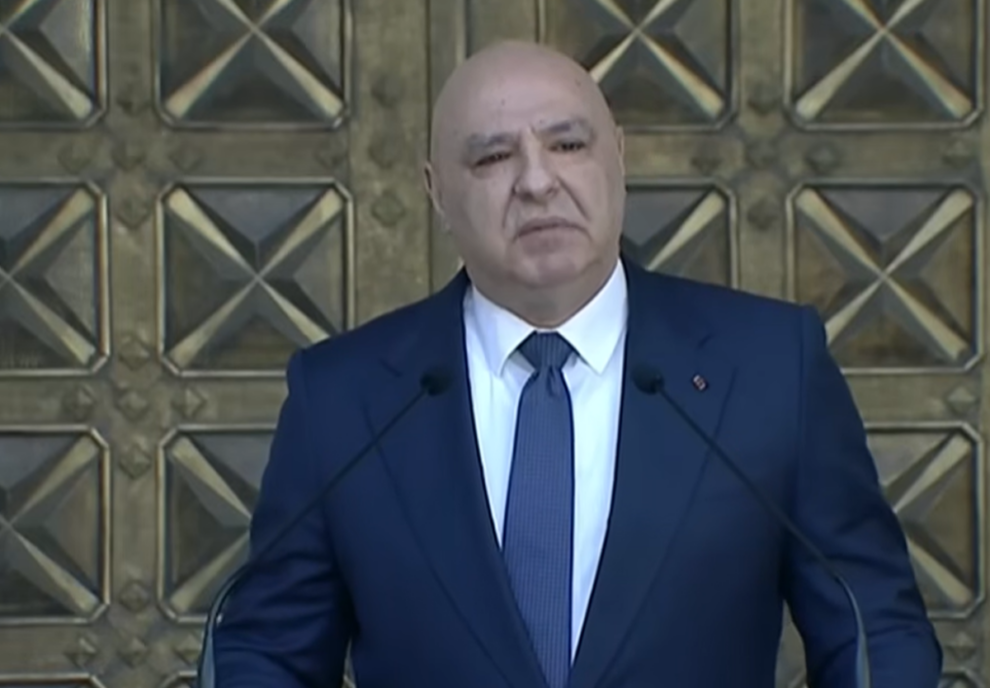
Lebanese President Joseph Aoun and US Vice President JD Vance discussed a de-confliction mechanism for Lebanon on Monday, Aoun’s office said, as Vance said the move aimed to prevent spiralling Israel-Hezbollah violence.
After a first round of US-Iran talks in Switzerland on ending the Middle East war, mediators Pakistan and Qatar said on Monday that Tehran and Washington had agreed to set up a “de-confliction cell” with Lebanon “to ensure the adherence of the termination of military operations” there.
Fighting between Israel and Hezbollah, which drew Lebanon into the Middle East war on March 2 with rocket fire at Israel in support of its backer Iran, has repeatedly threatened to derail regional peace efforts.
Aoun received a telephone call from Vance, US senior adviser Jared Kushner and Qatari Prime Minister Sheikh Mohammed bin Abdulrahman Al Thani, a statement from the Lebanese presidency said.
They discussed “the issue of consolidating the ceasefire in Lebanon, stopping the Israeli military escalation and steps that should be taken in this regard, including the possibility of forming a cell for this purpose,” the statement added.
Vance later told a press conference in Switzerland that the “de-confliction mechanism” was being set up to ensure “that when things happen, they don’t spiral into a broader escalation”.
“We do believe… that we can get to a place where Lebanon’s territorial integrity and sovereignty is protected, Israel’s security is protected,” he said.
“That’s going to require some coordination with the Lebanese armed forces, and also it’s going to require the Iranians to rein in Hezbollah,” Vance added.
– ‘We negotiate for ourselves’ –
After the talks in Switzerland, Iran’s Foreign Minister Abbas Araghchi wrote on X: “1st real test: Lebanon deconfliction cell.”
The negotiations came after Washington and Tehran last week signed a memorandum of understanding to end the broader Middle East war that includes Lebanon.
Israeli strikes and clashes with Hezbollah late last week threatened to derail the deal, but fighting in Lebanon has been paused since Saturday evening, after Iran said it had closed the strategic Strait of Hormuz again in response to Israel’s attacks.
Prime Minister Benjamin Netanyahu said on Sunday that Israeli forces would remain in southern Lebanon “as long as necessary”, while Hezbollah chief Naim Qassem rejected any Israeli “security zone” inside Lebanon.
Israel nonetheless said all war-related restrictions in its northern border areas were lifted from Monday morning.
Under US pressure, Lebanese officials began direct talks with Israel in April in Washington, and a fifth round of negotiations is scheduled to begin on Tuesday.
Lebanese authorities are seeking the withdrawal of Israeli troops from the country and to separate the negotiations from the US-Iran deal.
“We negotiate for ourselves, and we do not accept any other party doing so for us,” Aoun said later Monday.
“We welcome any assistance that comes from any country to end the war, particularly as the situation in the region is interconnected,” he added.
“But there is a big difference between trying to help us and interfering in our internal affairs,” he said, alluding to Iran, which through Hezbollah has long wielded significant political influence in Lebanon.

Add Comment