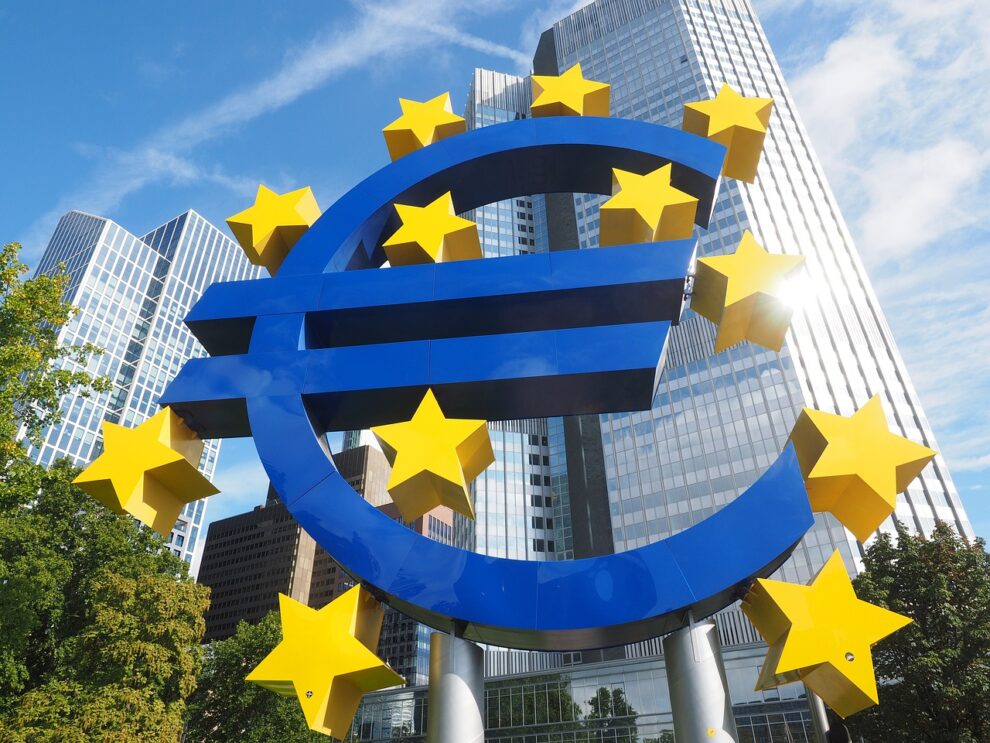
Eurozone inflation rose in May as the Middle East war sent energy costs soaring, official data showed Tuesday, reinforcing the likelihood of an interest rate increase in the single currency area.
Consumer price rises accelerated to 3.2 percent last month, the EU’s statistics agency Eurostat said, up from 3.0 percent in April.
The reading was in line with forecasts from analysts polled by Bloomberg but lower than the 3.3 percent predicted by economists for FactSet.
Inflation in the single currency area is sharply higher than the European Central Bank’s two percent target, following a third consecutive rise.
Of particular importance for the ECB ahead of its next meeting on June 11 is core inflation, which strips out volatile energy and food prices.
Core inflation accelerated to 2.5 percent in May after 2.2 percent in April, Eurostat said, above the 2.4 percent forecast by economists for Bloomberg and FactSet.
Analysts and investors have been expecting the ECB to raise rates to signal its willingness to act in keeping a lid on inflation.
“This is the expected uptick in inflation that will motivate the central bank to decide on an ‘insurance’ hike,” ING bank’s Carsten Brzeski said in a note.
The European Union’s economy is more vulnerable to fluctuations in energy prices because it is a net energy importer.
Energy price inflation rose to 10.9 percent in May from 10.8 percent in April, while services inflation surged to 3.5 percent last month from 3.0 percent in April.
The EU executive expects inflation to remain above the ECB’s target this year.
Brussels has sharply raised its forecast for inflation in the 21-nation eurozone to 3.0 percent this year, after a previous prediction of 1.9 percent.
“For inflation in the eurozone, the only way is currently up. Not a sharp up but a rather moderate and gradual lift,” Brzeski said.

Add Comment