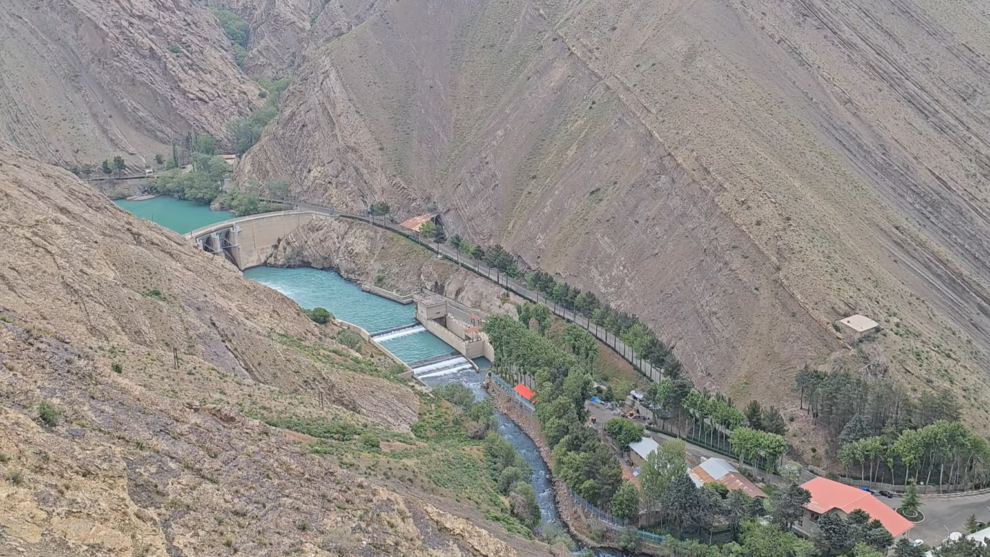
The reservoir of the Amir Kabir dam, one of the largest supplying Iran’s capital, is still largely empty despite sporadic winter rainfall following the worst drought in decades, local media reported Wednesday.
Tehran has seen intermittent rain since early December after months of dry weather, partially replenishing some of the city’s reservoirs but leaving overall levels critically low.
Iran, a largely arid country, has for years suffered chronic dry spells and heat waves, which are expected to worsen with climate change.
“Out of a total water storage capacity of 205 million cubic metres in the reservoir of this dam, only six million cubic metres of water are currently stored”, just three percent of capacity, the Tasnim news agency reported, referring to Amir Kabir, also known as the Karaj dam.
The Tehran municipality’s newspaper, Hamsharhi, republished the report, saying it was “not possible to draw more water from the current reservoirs” of the dam.
On Tuesday, the official IRNA news agency reported severe deficits of 88 percent at Amir Kabir, 51 percent at the Lar dam, 48 percent at the Taleghan dam, and 53 percent at both the Mamlou and Latian dams “compared to the same period last year”.
Speaking in parliament on Tuesday, Iranian President Masoud Pezeshkian said the country’s water situation remains “critical”, and that “all 31 provinces have water supply problems”.
“Water management in the country is vital and urgent; if we fail to control it, it risks creating problems that will be difficult to resolve,” he said.
Rainfall in Tehran and the neighbouring province of Alborz has been at historically low levels, according to IRNA.
Tehran, located on the southern slopes of the Alborz Mountains, experiences hot, dry summers, sometimes rainy autumns and winters that can be harsh and snowy.
Iranian authorities have carried out several cloud seeding operations to induce rainfall in recent months and resorted to cutting off water supplies periodically to manage consumption.

Add Comment