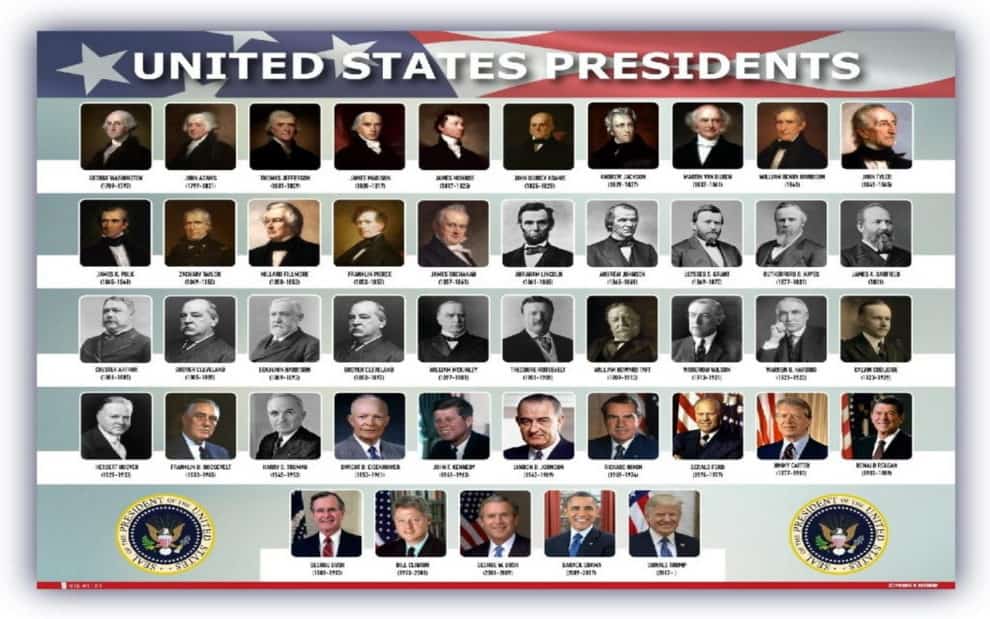
Leadership is about more than holding a position of authority. The most influential leaders are often those who can unite people, communicate a clear vision, respond effectively to crises, and leave a lasting impact on their country.
Presidential historians consider many of these qualities when evaluating U.S. presidents. In C-SPAN’s 2017 Presidential Historians Survey, presidents were assessed across several areas, including public persuasion, economic management, moral authority, crisis leadership, relations with Congress, international relations, administrative skills, and their ability to pursue a clear national vision.
Since George Washington became the first president of the United States in 1789, the presidency has been shaped by leaders with very different personalities, priorities, and approaches to governing. Some are remembered for guiding the country through war or economic hardship, while others are recognized for expanding American influence, strengthening institutions, or introducing major domestic reforms.
Below is a look at 10 American presidents who have earned prominent places in historical rankings and the achievements that helped define their presidencies.
The Top 10 Best American Presidents in History
10. James Monroe (1817–1825)

James Monroe, the fifth president of the United States, is remembered in particular for his handling of foreign affairs and for presiding over a relatively stable period in American politics.
During his administration, the United States resolved several long-running disputes with Britain and acquired Florida from Spain. Monroe is also closely associated with the Monroe Doctrine, which became one of the most influential principles in the history of U.S. foreign policy.
His presidency is often remembered for political stability, diplomatic progress, and the expansion of American influence in the Western Hemisphere.
9. Ronald Reagan (1981–1989)

Ronald Reagan entered politics after a successful career as an actor and eventually became the 40th president of the United States.
One of Reagan’s greatest political strengths was his ability to communicate directly with the American public. His confident speaking style and optimistic message earned him the nickname “The Great Communicator.”
His administration pursued major economic reforms, including substantial reductions in income tax rates through legislation such as the Economic Recovery Tax Act of 1981 and the Tax Reform Act of 1986.
Reagan also played a major role in U.S. foreign policy during the final years of the Cold War, making his presidency one of the most consequential of the late 20th century.
8. John F. Kennedy (1961–1963)

John F. Kennedy served as the 35th president of the United States from 1961 until his assassination in November 1963.
Although his presidency lasted less than three years, Kennedy became one of the most recognizable political figures in modern American history. His charisma, speeches, and ability to inspire the public contributed heavily to his reputation as an effective communicator.
His administration faced several defining moments of the Cold War, including the Cuban Missile Crisis, while also advancing the U.S. space program and publicly supporting greater progress on civil rights.
7. Harry S. Truman (1945–1953)

Harry S. Truman became president in April 1945 following the death of Franklin D. Roosevelt. Before taking office, he had served as Roosevelt’s vice president for only a few months.
Truman inherited the presidency at an extraordinary moment in history, with World War II approaching its conclusion and a new global political order beginning to emerge.
His administration helped shape postwar American foreign policy through initiatives such as the Truman Doctrine and the Marshall Plan. At home, Truman also took important steps toward racial equality, including ordering the desegregation of the U.S. Armed Forces.
His willingness to make difficult decisions during periods of uncertainty remains one of the defining features of his presidency.
6. Thomas Jefferson (1801–1809)

Thomas Jefferson, the third president of the United States, is remembered for his political vision and his role in dramatically expanding the country.
The most significant territorial achievement of his administration came with the Louisiana Purchase in 1803. The United States acquired an enormous area of land from France, effectively doubling the size of the young nation and opening vast new territories to exploration and settlement.
Jefferson’s presidency also helped shape debates over the role of the federal government, individual liberty, and the future direction of the American republic.
5. Dwight D. Eisenhower (1953–1961)

Dwight D. Eisenhower served as the 34th president of the United States after gaining international recognition as a military commander during World War II.
His eight years in office coincided with a period of significant economic growth and major infrastructure development. One of his administration’s most lasting domestic achievements was the creation of the Interstate Highway System, which transformed transportation and commerce across the country.
Eisenhower also signed legislation establishing NASA in 1958 as competition between the United States and Soviet Union intensified during the Space Race.
His calm leadership style, military experience, and approach to governing contributed to his strong reputation among presidential historians.
4. Theodore Roosevelt (1901–1909)

Theodore Roosevelt became president following the assassination of William McKinley in 1901. At age 42, he became the youngest person ever to assume the U.S. presidency.
Roosevelt brought enormous energy to the White House and used the presidency to promote economic reforms, consumer protections, conservation, and a more active role for the federal government.
His administration challenged powerful business monopolies and greatly expanded the protection of public lands and natural resources.
Roosevelt was also an influential figure in international diplomacy. His role in negotiating an end to the Russo-Japanese War helped him become the first U.S. president to receive the Nobel Peace Prize.
3. Franklin D. Roosevelt (1933–1945)

Franklin D. Roosevelt served as the 32nd president of the United States and remains the only president elected to four terms.
He entered office in 1933 during the depths of the Great Depression and introduced a sweeping collection of economic and social programs known as the New Deal. These policies reshaped the federal government’s role in the economy and provided assistance to millions of Americans struggling through the economic crisis.
Roosevelt later guided the United States through most of World War II, working closely with Allied leaders as the conflict reshaped the international order.
His ability to communicate with the public during periods of profound uncertainty, combined with his leadership during two of the greatest crises in American history, places him consistently near the top of presidential rankings.
2. George Washington (1789–1797)

George Washington was the first president of the United States and remains one of the most important figures in the country’s political history.
A military commander during the American Revolution, Washington took office in 1789 at a time when the presidency itself was a completely new institution. Many of the customs and expectations associated with the office were established during his two terms.
Washington helped organize the new federal government, supported the creation of a national financial system, and worked to maintain stability at home while keeping the young country out of major international conflicts.
His decision to leave office voluntarily after two terms also established an important democratic precedent that influenced American presidents for generations.
1. Abraham Lincoln (1861–1865)

Abraham Lincoln is frequently ranked among the greatest presidents in American history because of his leadership during the Civil War and his role in bringing slavery in the United States toward its end.
Lincoln took office in 1861 as the country was breaking apart. Over the next four years, he led the Union through the bloodiest conflict in American history while working to preserve the United States.
In 1863, he issued the Emancipation Proclamation, declaring enslaved people in areas under Confederate control to be free. His administration also supported the constitutional process that ultimately resulted in the 13th Amendment and the abolition of slavery.
Lincoln’s speeches, political judgment, crisis management, and commitment to preserving the Union have made his presidency one of the most extensively studied in U.S. history.
Final Thoughts
Ranking American presidents will always involve some degree of debate. Different historians place greater emphasis on different qualities, and public views of a presidency can change as new research and historical perspectives emerge.
What sets many of the highest-ranked presidents apart is their ability to lead during moments when the country faced extraordinary challenges. From George Washington establishing the foundations of the presidency to Abraham Lincoln confronting the Civil War and Franklin D. Roosevelt navigating economic depression and global conflict, their decisions shaped the direction of the United States for generations.
Historical rankings may change over time, but the influence of these presidents on American politics, institutions, and society remains significant.


Add Comment