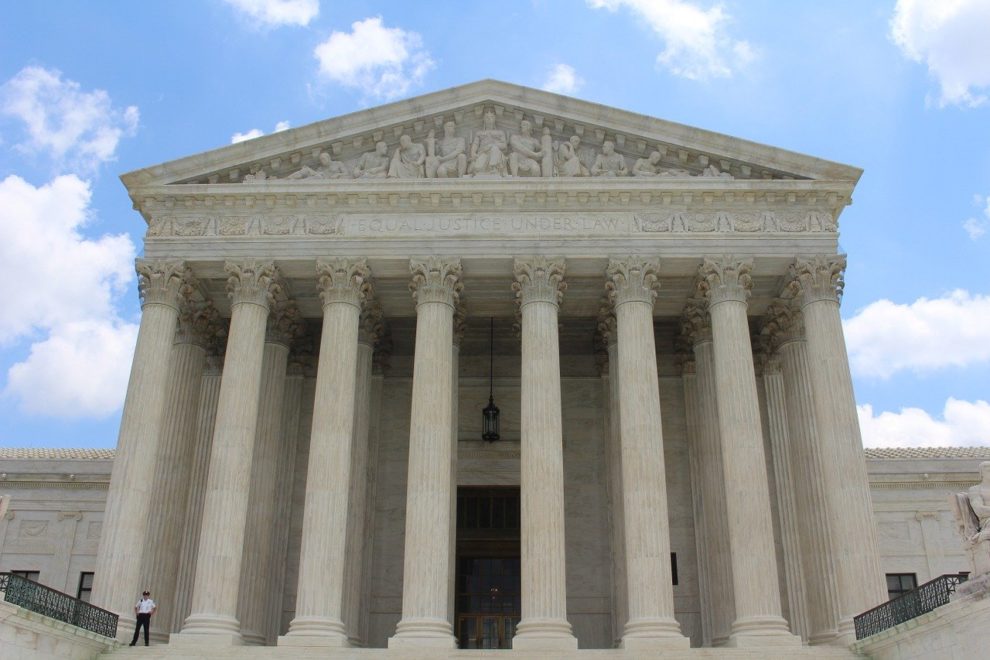
The US Supreme Court on Thursday backed a Trump administration move to strip deportation protections from some 350,000 Haitians and 6,000 Syrians living in the United States.
The conservative-dominated court, in a 6-3 ruling, said the Department of Homeland Security’s decision to end Temporary Protected Status (TPS) for Haitian and Syrian immigrants was not subject to judicial review.
TPS protects its holders from deportation and is granted to people deemed to be in danger if they return home because of war, natural disaster or other extraordinary circumstances.
Lawyers for Haitian and Syrian TPS holders contended during oral arguments before the court in April that conditions in their home countries remained unsafe and the administration’s move was motivated at least in part by racial hostility.
Justice Samuel Alito, who wrote the majority opinion in which he was joined by the five other conservative justices on the top court, rejected claims that race was a “motivating factor” in President Donald Trump’s decision to strip Haitians of TPS status.
“None of the cited statements by either the President or the (Homeland Security) Secretary was overtly racial, and in substance all expressed policy views that could rest on race-neutral justifications,” Alito wrote.
Trump campaigned for the White House on a pledge to expel millions of migrants and has pushed to dismantle the TPS program as part of his broader immigration crackdown. At the height of the 2024 election campaign, Trump stoked fears about Haitian immigrants by falsely claiming they were eating Americans’ pets.
The Supreme Court ruling in the TPS case could have implications for more than one million beneficiaries of TPS status from more than a dozen countries.
TPS status has been revoked for nationals of Afghanistan, Cameroon, Ethiopia, Honduras, Myanmar, Nepal, Nicaragua, Somalia, South Sudan, Venezuela, Yemen, and others in addition to Haitians and Syrians since Trump took office.
Haitians became eligible for TPS in 2010 following a devastating earthquake, and the country continues to suffer from severe poverty, rampant violence from heavily armed gangs and chronic political instability.
The State Department advises Americans not to travel to the Caribbean nation “due to kidnapping, crime, civil unrest and limited health care.”
TPS was extended to war-torn Syria in 2012.
Justice Sonia Sotomayor, a liberal, questioned during oral arguments whether a “discriminatory purpose may have played a part” in the Trump administration’s decision to strip TPS status from Haitians and referred to statements by the Republican president.
“We have a president saying at one point that Haiti is a quote filthy, dirty and disgusting s-hole country — I’m quoting him — and where he complained that the United States takes people from such countries instead of people from Norway, Sweden or Denmark,” Sotomayor said.
Solicitor General John Sauer replied that the president’s comments were being taken out of context and he was referring to “problems of crime, poverty and welfare dependency.”
Sauer said court review of TPS decisions was barred to prevent “judicial micromanagement” of foreign policy determinations.

Add Comment