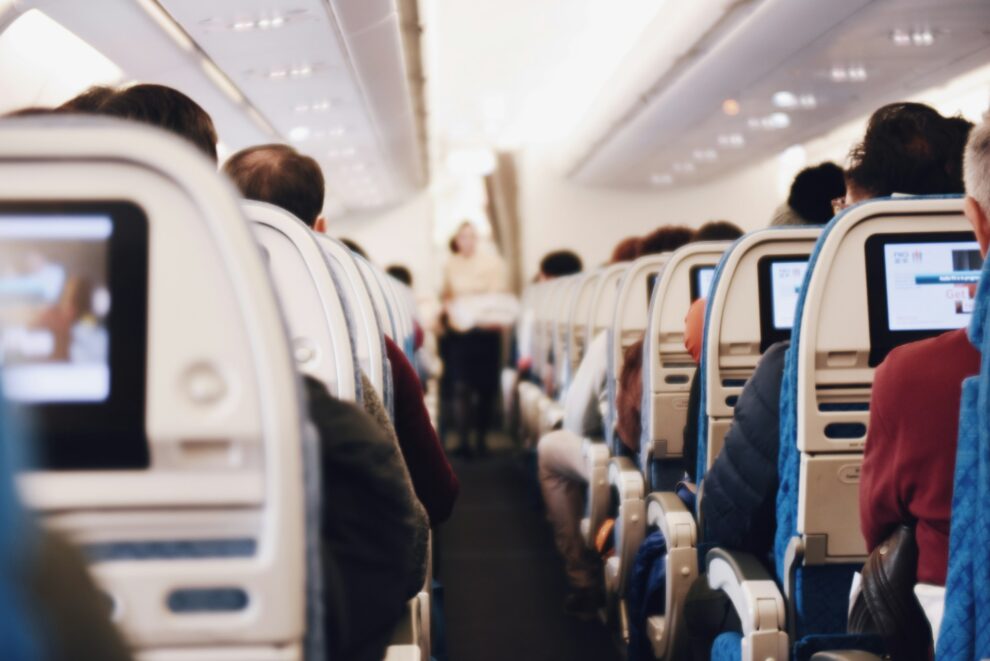
There’s something about being in an airplane that sends some people into odd behaviors, perhaps due to the inability to get out of it whilst in mid-air.
The rise in air rage incidents and disruptive passengers has increased globally, and therefore, cabin crews need to be trained regularly in psychological training as well as how to verbally de-escalate situations that occur. They should also be trained in physical restraint techniques.
A well-trained crew helps to prevent minor arguments from turning into emergency diversions.
Managing Complex Medical Emergencies in the Skies
With longer commercial flights available, this often means passengers will spend more time at higher altitudes, which can often be a cause of tension amongst individuals. It can also lead to complex medical emergencies in the sky.
The training focus should be on advanced first aid, the use of CPR, and using automated external defibrillators, and handling mid-air births or heart attacks.
Crews act as first responders when professional medical help is thousands of feet away. That’s a big responsibility but one that is important to be trained for when you’re responsible for so many people up in the air.
As well as the passengers, cabin crews need to be able to adapt to the demanding schedules that come with this role. Therefore, fatigue risk management is useful for training so that it ensures staff can function both optimally and safely, despite the disruptive time zones faced.
Security and Conflict Management
Speaking of tension amongst flight passengers, incidents of air rage rising require crew members to be able to handle this conflict in the best way possible.
Security threats remain something to be ever-present, and flight attendants nowadays are trained to identify unlawful interference and suspicious behavior. They act as the first line of defense in the cabin.
A lot has also changed with security as you go through the airport, but that doesn’t minimize all of the risks possibly present. Cabin crew is still an essential part in helping to keep the passengers safe while traveling.
Adapting to Next-Generation Aircraft and Technology
Modern plans often feature advanced composite materials and lithium-ion battery risks, as well as digital cabin systems. That shift in modern technology makes it a more adaptable space when it comes to tackling problems within the plane.
A lot of training nowadays is often on high-tech firefighting methods for device batteries and for operating smart galley equipment, too.
Technical literacy ensures the cabin crew can manage modern safety hazards quickly and effectively every time.
Training is the Backbone of Modern Aviation Safety and Customer Trust
As cabin crew, training is the backbone of modern aviation safety and customer trust. Every cabin crew member should therefore be up to date with their training so that they’re fully prepared to handle any situation or crisis, should it come their way.
While such complex problems and scenarios are rare nowadays, it’s still vitally important to ensure cabin crew is prepared for whatever situation is thrown their way.

Add Comment