

- EU orders TikTok to change its personalized "For You" feed under the Digital Services Act or face large fines.
- Regulators say the recommendation algorithm creates harmful "rabbit holes" exposing children and vulnerable users to repeated, damaging content; TikTok rejects the claims.
- EU demands stronger design changes: prioritize explicit user preferences, stop using viewing time as a recommendation signal, improve controls and testing.
- TikTok says EU statements are inaccurate and defends its record on community safety and user controls.
- If violations are confirmed the European Commission could fine TikTok up to six percent of global annual turnover; EU plans wider child protection measures.
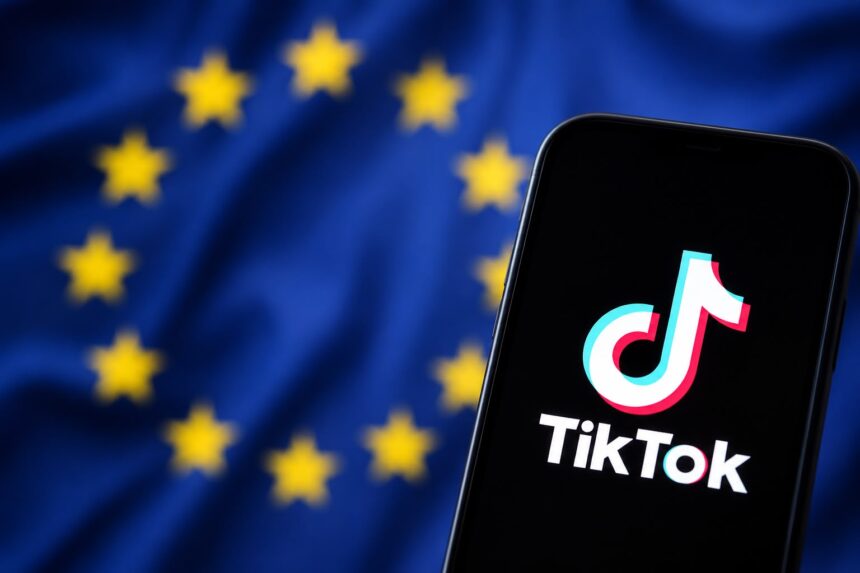
The EU told TikTok on Friday to change the “harmful” design of its personalised For You feed or risk large fines under the bloc’s digital content rules.
The European Union warned that TikTok’s recommendation system exposes children and vulnerable individuals to potentially damaging content by pushing a stream of videos similar to those the user has previously engaged with. TikTok rejected the accusations.
Brussels accused TikTok of violating the EU’s Digital Services Act (DSA) over the “harmful ‘rabbit holes’ effect”, which happens when users are fed related videos based on an algorithm, in some cases leading to more dangerous content.
“The more a user interacts with a certain type of content, the more TikTok’s ‘For You’ feed algorithm recommends similar content. This design can be harmful when such endless and repeated exposure involves, for example, content about sadness, isolation or body image,” the European Commission said.
Even when users tell TikTok they don’t like certain content, the platform’s algorithm continues to suggest similar videos.
TikTok has made some tweaks to mitigate the risks but they were not effective, the EU said, demanding more radical design changes.
The commission gave examples of changes the platform could make, such as:
— rely more on users’ explicit preferences, because the EU found that the app’s “not interested” button “may not be enough to change the content feed”
— disable viewing time as an indicator to recommend content
— increase the accessibility and ease of use of user controls, and regularly test its algorithm.
A TikTok spokesperson hit out at the EU’s “series of statements that are fundamentally inaccurate and distort our platform’s architecture and our commitment to user safety”.
The spokesperson insisted TikTok has “a strong record of protecting our community while giving users direct and intuitive control over their content experience”.
Friday’s demand comes after the EU in February told TikTok to change “addictive design” features, and after it accused the company in July of exposing children to risks like cyberbullying and predatory behaviour.
The EU has ramped up its efforts to protect children, launching investigations into the world’s most popular platforms under the DSA law — part of the bloc’s legal armoury targeting digital giants.
Brussels plans to add to this by forcing social media companies to make platforms safe before children use them, as part of plans to ban children under 13 from social media, and permit only limited, supervised access until the age of 15.
– ‘Repeated exposure risks’ –
A senior EU official said the February findings on TikTok focused on features like notifications, whereas Friday’s view was about the algorithm itself.
TikTok is popular because of that algorithm, say observers, and the official admitted the EU was targeting its engagement-based business model.
TikTok can now access the EU’s files and defend itself against the accusations.
But if the EU regulator’s views are confirmed, the commission can impose a fine of up to six percent of the company’s total worldwide annual turnover.
In its preliminary findings, the EU said TikTok did not “adequately assess” how its recommendation algorithm put users’ wellbeing at risk.
The EU worried that repeated exposure to certain content could lead to “increased feelings of sadness or anxiety, body dissatisfaction, lower self-esteem, or worsening of existing eating disorders”.
Brussels also told Meta in July to change the “addictive design” of Facebook and Instagram in an investigation started under the DSA.
TikTok and Meta are subject to similar scrutiny around the world, especially in the United States where there have been claims lodged with the courts over the dangers the platforms pose to young people.
TikTok in September avoided a trial after agreeing to pay Alabama at least $100 million and enact time limits and other restrictions for teenage users.