

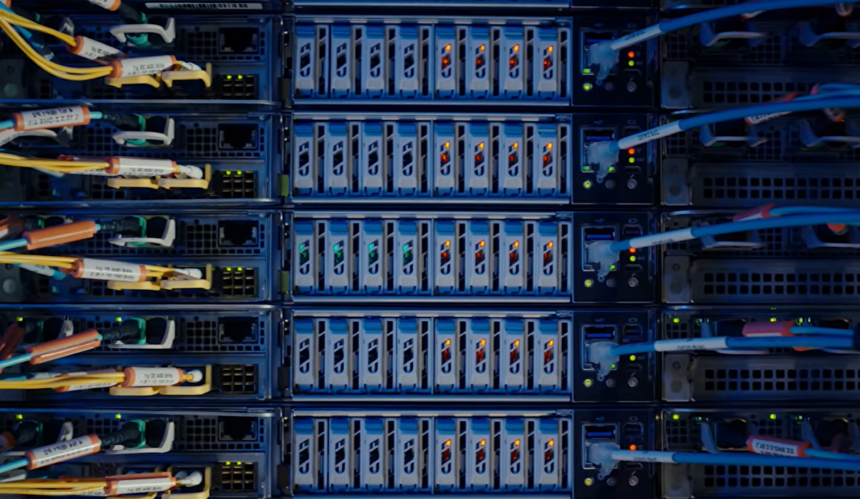
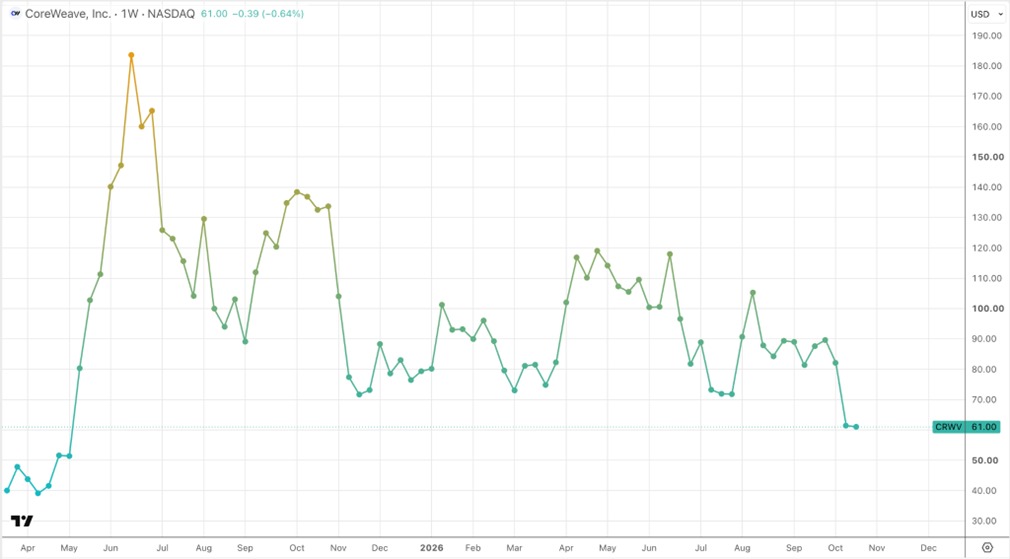
CoreWeave found itself at the center of a new wave of declines across the AI sector after its bonds were classified as troubled and its stock dropped by more than 20% in a short period. The company remains one of the largest providers of computing power for OpenAI, Microsoft, and other major clients, but its business model relies heavily on cheap access to capital. With tens of billions of dollars in debt and no profits, any increase in financing costs poses a direct risk to CoreWeave.
Against this backdrop, a re-evaluation of the entire future surrounding technology-related listings has begun — from infrastructure players to discussions around Revolut IPO and other major private companies in this sector. The general logic is gradually shifting from asking how quickly revenue can grow to how much capital will be needed for this growth and whether the business will then be able to service the debt it has raised.
CoreWeave is particularly affected by this issue. At the end of the second quarter, its debt exceeded $35 billion, with some estimates placing total debt closer to $50 billion. Meanwhile, the company plans to allocate up to $39 billion toward capital expenditures in just one year, after ending the first half with a loss of over $1 billion.
The company was one of the first to start using graphics processors as collateral, effectively turning Nvidia GPUs into financial assets that can be used to secure loans. As long as prices for computing power remain high and infrastructure utilization is close to maximum, this model works. But if demand slows down, the cost of equipment may decline while the debt burden remains.
The contract portfolio remains a strong aspect of the business. The volume of customers’ unfulfilled obligations reached $103.7 billion in the second quarter, with about 40% of this amount set to be realized by 2028. These contracts generally cannot be terminated without serious grounds, and Microsoft, OpenAI, and presumably Nvidia account for nearly three-quarters of the company’s revenue.
However, it is precisely this concentration that creates additional risk. If major customers cut back on capital programs or decide to build more of their own infrastructure, CoreWeave’s model will come under pressure. OpenAI remains a particularly vulnerable link, as it spends huge amounts on computing power without having yet achieved sustainable profitability.
The problems have already spread to other companies. Oracle shares fell by 10%, Nebius dropped by more than 15%, and Applied Digital and IREN also came under pressure. The cost of default insurance for CoreWeave and Oracle’s debt reached record levels. Investors began to re-evaluate not the demand for AI itself, but the ability of infrastructure companies to finance it at higher interest rates.
A potential rise in interest rates could accelerate this correction. If the Fed tightens monetary policy to combat inflation — with its next decision scheduled for Wednesday, October 28, 2026, according to the US economic calendar — building data centers and purchasing accelerators will become even more expensive. For a business operating with such a heavy debt load, even a minor increase in borrowing costs can significantly complicate the path to profitability.
At the same time, CoreWeave is continuing its aggressive expansion. The company plans to build an AI cloud with a capacity of 240 MW in India — with the potential to scale up to 480 MW — while simultaneously preparing projects for another 360 MW in Indonesia. Total capacity from these Asian projects alone could reach approximately 600 MW by 2028.
Thus, the faster the company expands, the more future revenue it can potentially generate, but the higher its debt burden grows before that revenue materializes. While contracts worth over $100 billion offer a substantial safety margin, investors now demand proof of financial stability rather than just raw demand. CoreWeave’s ability to convert its vast computing infrastructure into positive cash flow will serve as a key test for the viability of the AI economy.