


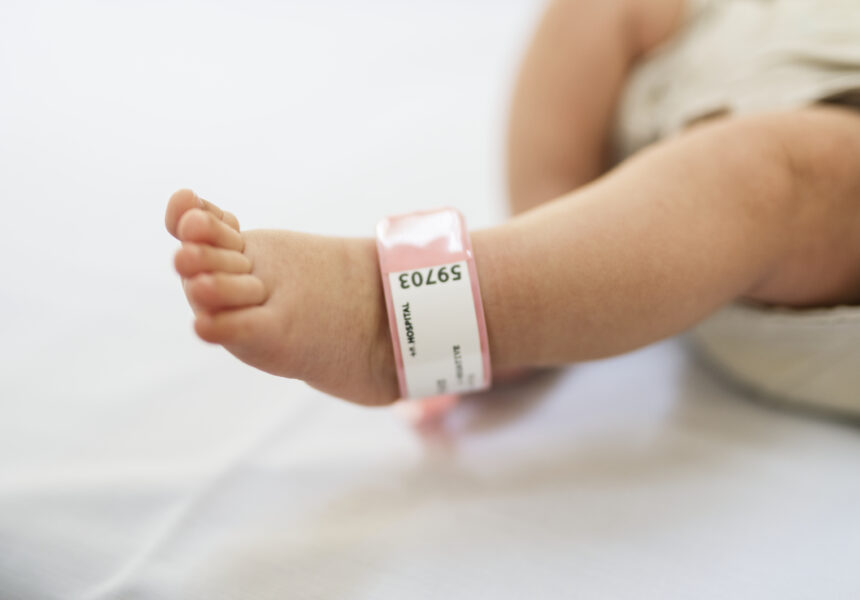
The small band around a newborn’s ankle may look similar to a hospital ID bracelet, but some bands have a very different job.
Hospitals use electronic infant protection technology to detect unauthorized movement, warn staff if a security band is removed, and monitor protected exits. For parents, much of this work happens out of sight. Nurses attach the device, check its status, and continue normal care while receivers and door controls watch for specific events.
At Accutech Healthcare Security Solutions, we develop electronic monitoring and security systems for healthcare environments, including our Cuddles infant protection system. Our work with hospitals gives us a close view of how infant security technology has to protect newborns without getting in the way of routine patient care.
The purpose is simple: give hospital staff another layer of protection during the time between birth and discharge.
Understanding how the technology works can also explain why hospitals place such close controls around maternity, postpartum, pediatric, and neonatal areas.
An Infant Security Tag Is Different From an ID Bracelet
A standard medical ID bracelet identifies a patient. It may show a name, date of birth, medical record number, or barcode used during care.
An electronic security band serves another purpose.
The band carries a tag that communicates with equipment installed around the hospital unit. The system can recognize the tag and respond when the infant reaches a monitored location or when someone interferes with the band.
That means the hospital isn’t relying on someone to notice unusual movement by chance.
A typical setup may include:
- A small electronic tag attached to the infant
- Receivers installed around patient areas and exits
- Door controls that react when a protected tag approaches
- Alarm software used by nurses or security staff
- Connections with cameras, paging, nurse call, or access-control equipment
The exact design varies between hospitals. A small birthing center may have different needs from a large medical campus with several maternity floors.
The basic idea stays the same. The security tag identifies the infant electronically, while the rest of the system watches for events that require a staff response.
What Happens If a Baby Approaches a Protected Exit?
One of the main jobs of infant protection technology is monitoring exits.
Suppose someone carrying a tagged infant walks toward a door that leads out of the protected maternity area. A receiver near the exit can recognize the tag and send that information to the security system.
What happens next depends on how the hospital has configured the equipment.
The system may sound an alarm, notify nursing staff, activate another alert device, or cause the door to follow a preset security rule. Staff can then check the situation and decide what action is needed.
The response can happen in a few steps:
- The infant’s tag enters a monitored area.
- A nearby receiver detects the tag.
- The system identifies the infant and the location.
- The exit follows its programmed security rule.
- Nursing or security staff receive an alert.
This approach gives staff information before an infant has simply disappeared from view.
It also allows the hospital to build security around normal care. Authorized movement can still occur when nurses transport babies for treatment, testing, or other approved reasons.
Tamper Detection Adds Another Layer
Exit monitoring doesn’t cover every possible situation. Someone could also attempt to remove the security band before moving an infant.
For that reason, many systems are designed to detect tampering.
With our Cuddles infant protection system, the tag is secured with a soft, self-adjusting bracelet designed to stay in place as an infant moves or changes weight after birth. The tag itself does not sit directly against the baby’s skin. If the bracelet is cut or forcibly removed, the system is designed to trigger an alarm.
That type of design has two jobs.
The band needs to remain secure enough to perform its security function, but it also needs to work on newborns of different sizes without making routine care difficult. Premature infants and full-term babies can have very different needs, so the physical design matters.
Parents may notice nurses checking the band during a hospital stay. Those checks can include confirming that the device is active, inspecting the fit, or verifying its battery status.
The security device is small, but managing it becomes part of the unit’s daily workflow.
Fast Check-Ins Can Help Staff Spot a Missing Signal
A security tag isn’t useful if the system takes too long to notice that communication has stopped.
Different products handle this in different ways. Some systems have the tag communicate with the surrounding equipment at set intervals so the system can confirm that the device is still present.
Our Cuddles Pulse tags send a check-in signal every 1.5 seconds when they’re not in an alarm state. If seven signals in a row are missed, the system can notify staff and initiate a floor lockdown within 15 seconds of detecting the lost tag.
Frequent communication gives staff another type of warning. They don’t have to wait for a tag to reach an exit before learning that something has changed.
That could matter if a device is removed, stops communicating, or becomes separated from the system unexpectedly.
Hospitals evaluating this type of equipment should ask how quickly a system identifies a missing signal and what happens once that threshold is reached. A technical specification is much easier to judge when the hospital knows what staff will actually see and do.
Hospital Network Problems Shouldn’t Automatically Mean Lost Protection
Modern hospitals depend heavily on computers and networks. Patient records, phones, Wi-Fi, cameras, medical devices, access control, and communication tools may all rely on connected infrastructure.
Those connections create another question for infant security: what happens during an IT failure?
A hospital shouldn’t assume every security product behaves the same way.
Some equipment may depend on network services for basic operation. Other designs keep core detection and perimeter functions running separately.
Cuddles is built around a hardware-driven, software-supported design. Core infant protection and alarm functions can continue operating if the hospital’s PC, server, or network becomes unavailable. The software remains useful for monitoring, reports, admissions, discharges, and system management, but the core protection layer does not depend entirely on those services.
That separation gives hospital teams another factor to examine during purchasing.
They can test scenarios such as:
- A workstation becoming unavailable
- A network connection dropping
- A receiver losing communication
- A temporary power interruption
- An integration with another hospital system failing
- A security tag failing to report normally
A demonstration under normal conditions shows what a system can do. Testing failure conditions shows what staff may face on a difficult day.
Cameras and Nurse Call Systems Can Provide More Context
An infant alarm gives staff a reason to act. Other hospital systems can help explain what is happening.
Consider an alarm near an elevator.
Security staff may want to see the closest camera. Nurses may need an alert through equipment they already use. Access-control records may show whether an authorized employee entered the area at the same time.
Connecting those tools can reduce the amount of searching staff have to do after an alarm begins.
Cuddles can integrate with wired and wireless nurse call systems as well as paging, access control, and CCTV equipment. Its software also supports multi-floor monitoring and event escalation, which can help larger facilities manage activity across several protected areas.
Hospitals still need to decide how each connection should work.
Sending every event to every employee would create noise. Sending too little information could slow the response.
The goal should be to give the right people enough information to act without making routine care harder.
Nurses Need Security Technology That Fits Patient Care
Nurses don’t interact with infant security equipment once during installation and then forget about it.
They use it during admission, transfers, treatment, alarm checks, and discharge. Staff may also need to inspect batteries, activate or deactivate tags, and verify that the correct device is assigned to the correct patient.
Every extra step matters during a busy shift.
That is why hospitals shouldn’t judge Infant Security Systems only by their alarm features. The daily staff experience matters too.
A hospital considering a system can ask nurses to test common tasks before making a decision. Can a new infant be added quickly? Is the tag status easy to understand? Are different alarm types easy to tell apart? Can a nurse check a battery without calling IT? What does discharge require?
Cuddles software uses seven alarm types and includes tools for admissions, discharges, reports, multi-floor monitoring, and tag management. The ID-TAD handheld device can also be used to check tag numbers, warranty information, and remaining battery life.
Those details may sound small compared with alarms and locked doors, but they affect whether staff can use the system consistently.
Parents May Never See Most of the Security Work
Parents usually experience only the visible pieces of newborn security.
They may see locked maternity doors, visitor check-in procedures, matching ID bands, staff identification, cameras, or the small security tag attached to their baby.
Behind those visible measures is a larger process involving nurses, security teams, IT staff, and hospital facilities personnel.
The best sign may be that very little feels unusual.
Parents can hold and care for their newborn. Nurses can move babies for approved care. Staff can manage admissions and discharges. Meanwhile, the security equipment continues checking tags and watching protected boundaries.
That balance is what infant protection technology is meant to support: tighter control around unauthorized movement without turning ordinary newborn care into a series of obstacles.
For families wondering why their baby’s ankle carries an extra electronic band, the answer is straightforward. It gives the hospital another way to know when something isn’t happening as planned.