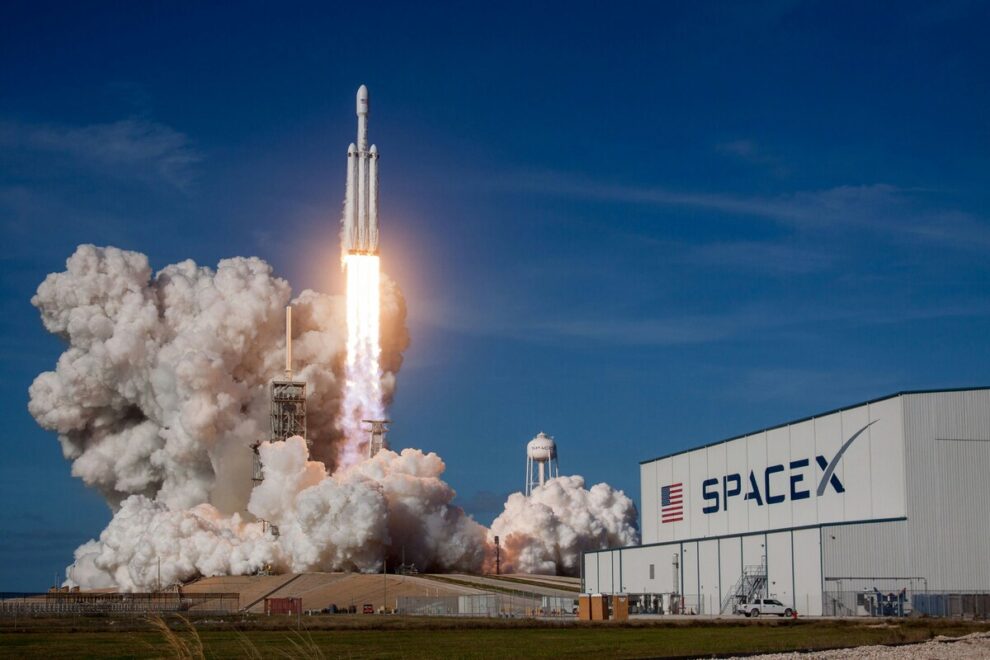
While SpaceX is preparing for an upcoming IPO and remains closed to public reporting, the key financial parameters of its business are starting to become visible — and they appear mixed. On one hand, the company is demonstrating massive scale, with revenue reaching $18.5 billion in 2025. On the other hand, the final financial result turned out to be negative, with losses approaching $ 5 billion. The primary driver for this shift is the recent integration of xAI, which pushed the profitable space business into the loss zone.
Apart from the xAI deal, SpaceX’s underlying business proved significantly more stable. Previously, revenue was estimated at $15-16 billion with a profit of about $8 billion. However, Elon Musk’s strategy goes far beyond the classical aerospace model, involving the vertical integration of AI infrastructure and including the deployment of orbital data centers in particular. This pivot now determines the company’s financial profile ahead of an IPO that could potentially bring its valuation to $1.75 trillion.
The Terafab project — a joint initiative of SpaceX, Tesla, xAI, and the newly joined Intel — is becoming a key element of this strategy. The initiative is not just about expanding the production base, but also about developing a new industrial platform for AI designed to provide up to 1 TWh of computing power annually. This serves as a signal to the market that the largest technology players are beginning to compete not only in software, but also across core infrastructure.
Intel’s participation in the project has become an important factor for the stock market. Following the collaboration news, its shares rose by almost 5%, with capitalization approaching $310 billion — the highest in recent decades. Investors are betting that the company can successfully reintegrate into the AI growth cycle, despite previous market-share losses. Tesla stock also posted gains after the partnership announcement.
An additional driver is the steady demand from large customers like Google, which continues to purchase Xeon-based server solutions. Combined with the general AI boom, this creates a window of opportunity for Intel to regain its position, which is already reflected in a market cap that has increased 3.5 times since April 2025.
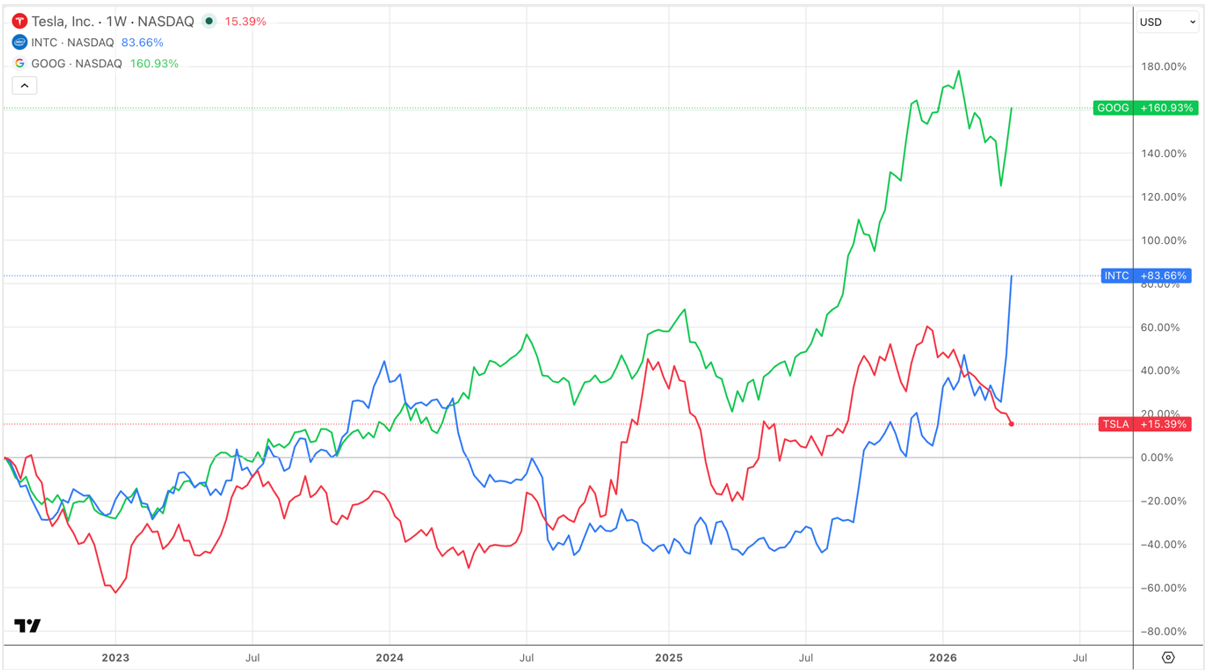
As a result, a new investment logic is forming, where the SpaceX IPO is being viewed not as the listing of a space company, but as the offering of a complex technological ecosystem combining space, AI, and semiconductors. In this context, current losses are perceived not as weakness but as a consequence of aggressive investments in the future market.
That is why a potential placement can have a significant impact on the entire capital market. It could redirect investment flows toward AI infrastructure projects, increase interest in related companies such as Intel, and at the same time raise investor expectations for transparency and the path to profitability of such business models. Moreover, SpaceX has requested fast-track inclusion in Nasdaq 100 and S&P 500 — with the former already confirming new rules for accelerated entry — a move that will further enhance the company’s influence.
Thus, the emerging combination of SpaceX, xAI, Tesla, and Intel reflects a broader shift in the market. The largest technology players seek to control not only the AI software but also the entire value chain, ranging from chips to infrastructure and end services. In light of this, the potential SpaceX IPO becomes an indicator of how investors are willing to finance a capital-intensive model for the development of AI and related industries. The success of the offering can consolidate the current investment cycle, while any signs of a risk reassessment can trigger a broader correction in the technology market.

Add Comment