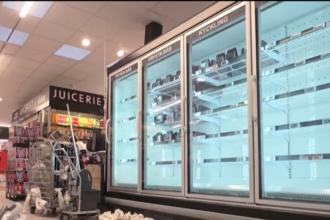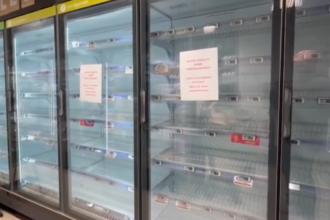


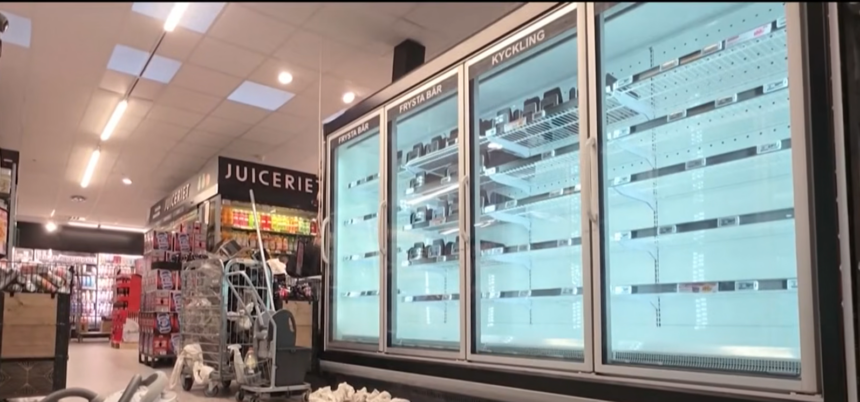
A massive cyberattack has targeted food supply chains across seven European countries. The attacks struck supermarket fridges and freezers, causing temperatures to soar to as high as 50°C. Cybersecurity experts speculate that these incidents could be part of a broader nation-state sabotage campaign. These attacks highlight the growing risks posed by internet-facing vulnerabilities in everyday infrastructure.
Scope of the Attack
The cyberattack has resulted in disruptions across Europe, impacting several major chains. The breach targeted roughly 40 Delhaize supermarkets in Belgium and Luxembourg. Meanwhile, fewer retailers were affected in Ireland, Sweden, Estonia, Finland, and the Netherlands.
So far, no hacking group has claimed responsibility for these attacks. There have also been no publicly reported ransom demands, leaving intelligence agencies searching for the source. The pattern of these attacks resembles that of incidents that impacted French supermarkets a few weeks ago, as well as refrigerator malfunctions at US military bases in August.
Supermarkets have been targeted because their supply chains are particularly vulnerable when their digital systems lack adequate protection. Supermarkets often use extensive networks of refrigeration controllers, building management systems, and door access panels. These systems are usually set up by third-party contractors without the oversight of dedicated cybersecurity teams. Since no ransom demands have been publicly reported, threat analysts suspect the motive is low-cost, deniable geopolitical sabotage. This is similar to recent undersea cable cuts and GPS jamming incidents.
Potential Risks to Other Services
Almost any modern internet-connected device can be exposed to cyber threats. Consequently, cybersecurity professionals warn that a wide range of systems are highly vulnerable. Researchers predict that attacks on pharmaceutical or hospital freezers could destroy critical vaccines and blood supplies worth millions of euros, creating life-threatening shortages.
Moreover, hackers could manipulate digital lift controllers to trap people between floors or shut down fire-evacuation safety modes during an emergency. Hackers can also target data centers by shutting down air conditioning or cooling systems to cause severe overheating and complete server destruction within minutes. Digital links to water treatment facilities, traffic lights, and power grids could be weaponized to cause disruption if their software vulnerabilities are exploited.
Separately, the National Cyber Security Centre (NCSC) has issued warnings that essential infrastructure globally must prepare for an unprecedented rise in automated, AI-powered malware attacks in the coming years.