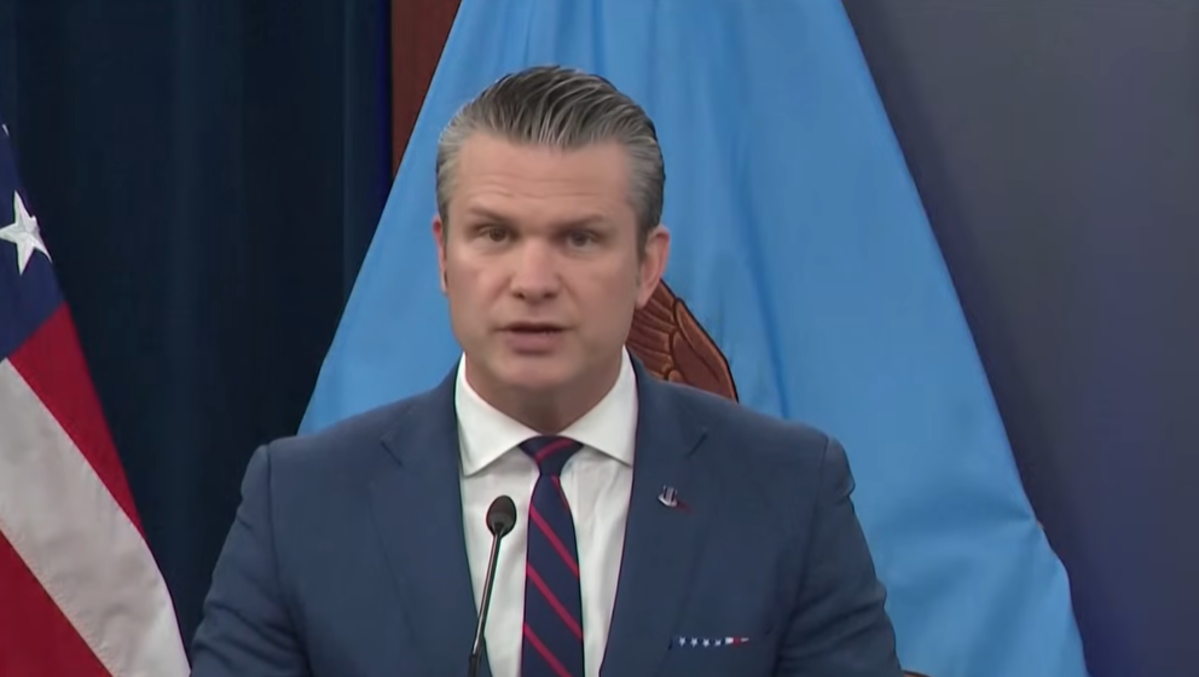



The Pentagon has prepared a new resilience initiative called FORTRESS America to enable US military installations to reportedly sustain essential operations for at least 90 days without outside support. Announced by Pete Hegseth and subsequently outlined by Pentagon chief spokesperson Sean Parnell, the initiative aims to address concerns over the military’s current reliance on standard civilian infrastructure. The objective is to maintain essential military operations during a severe national or global crisis.
Shift in Homeland Defense
Historically, US homeland defense planning relied partly on the country’s geographic isolation. The Atlantic and Pacific oceans were viewed as natural barriers against direct military threats. However, the Pentagon says this assumption is outdated.
The US military presently relies on local municipal infrastructure to power command structures, coordinate logistics, and manufacture weapons. The Pentagon has identified this as an “intolerable risk”. If civilian infrastructure collapses during a multi-front war, military operations could be severely disrupted. To mitigate this, FORTRESS aims to reduce military installations’ dependence on civilian infrastructure.
The plan envisions deploying small, transportable nuclear reactors at major military installations. This would be executed by deploying small, transportable nuclear reactors directly onto major installations. Doing so would provide a reliable source of electricity. Moreover, bases would be equipped with localized microgrids capable of completely disconnecting from standard civilian electrical grids. This would help maintain power during civilian grid outages. The plan also includes directives to install large-scale battery storage systems.
FORTRESS Framework
The plan is based on the premise that a major global war could severely disrupt international supply chains. Therefore, installations are required to build up adequate strategic reserves. The stockpiles are to include munitions, fuel, critical minerals required for high-end manufacturing, and advanced medical supplies.
To prepare for wartime production, the Pentagon is actively identifying commercial factories that can switch their production lines to defense manufacturing during a crisis. This involves establishing technical specifications, contracting arrangements, and conversion procedures in advance.
To ensure that the identified commercial factories meet military-grade criteria, recurring industrial stress tests and mobilization exercises will be conducted. These exercises would assess whether manufacturers could maintain production targets during prolonged domestic disruptions through prolonged domestic disruptions.
Geopolitical Alignment
Sean Parnell noted that the plan complements active defense priorities designed to strengthen American deterrence. Given concerns that global supply chains could be disrupted during a conflict, the government is working to secure supply chains closer to home during a multi-front conflict, the government is working to secure close-to-home supply chains. The US is also prioritizing defense ties and continuous logistics pipelines through the High North.
Protecting access to the Panama Canal would help US naval vessels and military supplies move between the Atlantic and Pacific. However, access to the canal would not eliminate the risk of naval interference or cyberattacks.
By strengthening the northern and southern regions of the hemisphere, the US aims to strengthen homeland security and reduce its vulnerability to external disruptions.
[Source]