



For months, the GoPro HERO 14 Black was one of the most anticipated action cameras online. Rumors pointed to a bigger sensor, a new processor, longer battery life, improved low-light video and possibly 8K recording. Those predictions were not entirely wrong—but the product name was.
As of August 2026, GoPro has not released a camera officially called the HERO 14 Black. Instead, the company put its next-generation technology into the new MISSION 1 Series. The MISSION 1 and MISSION 1 PRO arrived globally on May 28, 2026, effectively taking the place many buyers expected a HERO 14 to occupy.
Anyone searching for the GoPro HERO 14 release date, price or specifications is therefore looking for a camera that never appeared under that name. However, the MISSION 1 lineup shows what GoPro had been developing—and it is a much larger upgrade over the HERO 13 Black than a routine annual refresh.
Is the GoPro HERO 14 Black officially released?
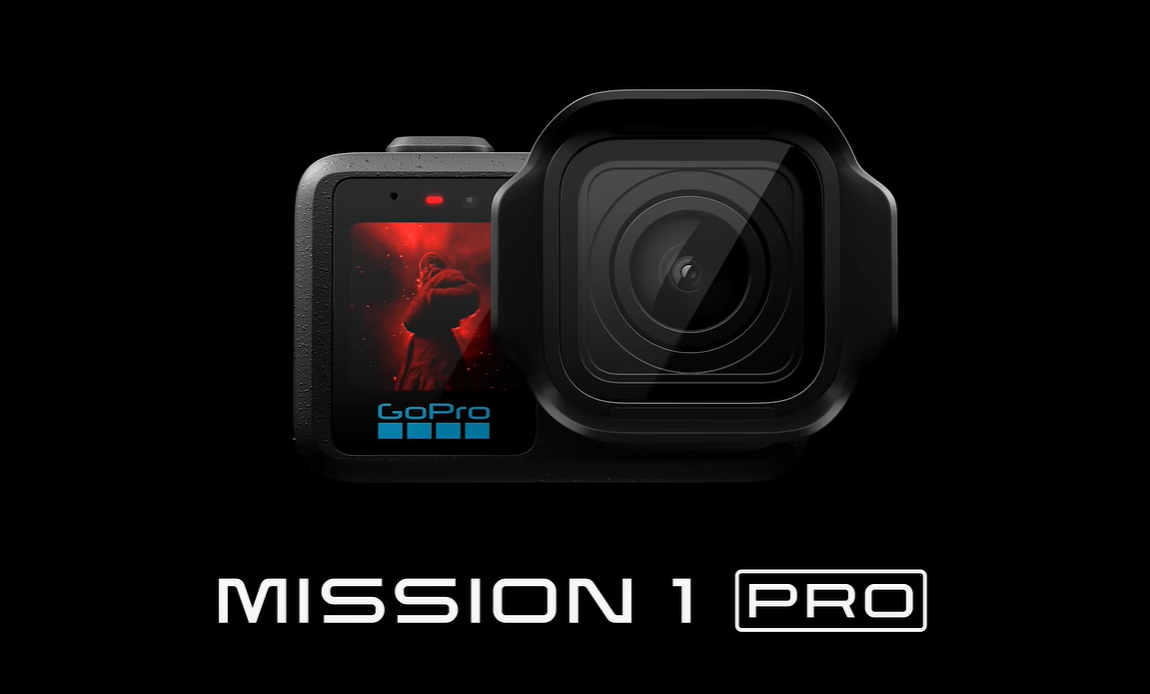
No. There is currently no official GoPro HERO 14 Black product page, launch announcement or confirmed release schedule. The earlier expectation was that GoPro would follow its familiar September launch cycle. The HERO 13 Black was announced on September 4, 2024, priced at $399.99, and released later that month.
When September 2025 passed without a HERO 14, speculation shifted toward 2026. In March 2026, GoPro confirmed that its new 5-nanometer GP3 processor would debut in cameras during the second quarter. The company announced the MISSION 1 Series on April 14 and placed the MISSION 1 and MISSION 1 PRO on sale worldwide on May 28, 2026.
The best answer to “When is the GoPro HERO 14 coming out?” is that GoPro appears to have skipped that expected name for its newest premium cameras. A future HERO-branded model remains possible, but GoPro has not confirmed one.
GoPro HERO 14 price: How rumors compared with reality
Before the announcement, most GoPro HERO 14 price predictions placed the camera around $400 to $450. That estimate made sense because the HERO 13 Black launched at $399.99, while rumors suggested a modest increase for a larger sensor and new processor.
The actual next-generation products are considerably more expensive. The MISSION 1 launched at $599.99, or $499.99 for existing GoPro subscribers through GoPro.com. The flagship MISSION 1 PRO costs $699.99, with a $599.99 subscriber price. GoPro is positioning the range as compact cinema equipment for filmmakers, professional creators and demanding action shooters.
For buyers hoping for a direct HERO 13 replacement at roughly $400, the price jump may be the biggest disappointment. However, the hardware is far more ambitious than the incremental upgrades normally associated with an annual HERO Black release.
Expected GoPro HERO14 specs that became real
Many GoPro HERO 14 rumors centered on a GP3 processor, and that prediction proved accurate. GoPro says GP3 uses a 5nm design, delivers more than twice the pixel-processing power of GP2 and includes a neural processing unit for AI-assisted imaging, scene recognition and improved low-light processing.
The rumored larger sensor also arrived. Both fixed-lens MISSION 1 models use a 50-megapixel 1-inch sensor with up to 14 stops of sensor-level dynamic range. That is a major change from the HERO 13 Black’s 27MP, 1/1.9-inch sensor and should help in dim conditions, where recent HERO cameras were often criticized.
The MISSION 1 PRO records up to 8K at 60 frames per second, 4K at 240fps and 1080p at up to 960fps in a short burst. It also supports 8K30 and 4K120 Open Gate recording in 4:3. The less expensive MISSION 1 tops out at 8K30, 4K120 and 1080p240, with 4K120 Open Gate capture.
Other upgrades include 50MP RAW photos, four microphones, 32-bit float audio, Bluetooth 5.3 audio, a maximum 240Mbps bitrate, HLG HDR, 10-bit color, GP-Log2 and timecode synchronization. GoPro also added 13 capture modes using machine learning and scene detection, including modes for diving, vlogging and low-light shooting.
GoPro HERO 14 vs HERO 13 Black
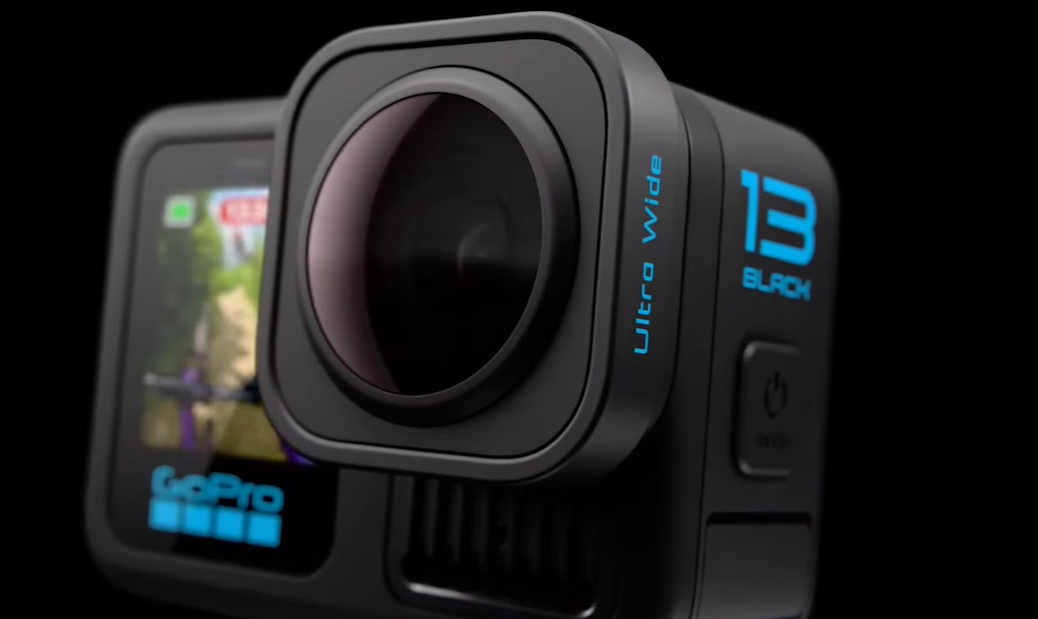
The difference between the HERO 13 Black and the MISSION 1 generation is substantial.
The HERO 13 Black records 5.3K60, 4K120 and 1080p240 video, captures 27MP photos and offers Burst Slo-Mo at up to 400fps in 720p. It uses HyperSmooth 6.0 stabilization, supports 10-bit color, HLG HDR, GP-Log, GPS telemetry and interchangeable HB-Series lens accessories. It is waterproof to 33 feet, or 10 meters, without a housing.
The MISSION 1 PRO raises maximum resolution to 8K60, doubles 4K slow motion to 240fps, increases still resolution to 50MP and introduces the GP3 platform. It is waterproof to 66 feet, or 20 meters, and has a 159-degree native field of view. Its rear OLED display is 14% larger than the screen on previous flagship GoPro cameras.
Battery life is another major improvement. The HERO 13 Black’s 1,900mAh Enduro battery is rated for more than 2.5 hours at 1080p30 and more than 1.5 hours at 4K30 or 5.3K30. The MISSION 1 Series uses a 2,150mAh Enduro 2 battery and is rated for more than five hours at 1080p30 or more than three hours at 4K30. The Enduro 2 battery also works with the HERO 13 Black.
One trade-off is accessories. HERO 13 Black’s HB-Series system—including macro, ultra-wide, ND and anamorphic options—was a major selling point. The larger MISSION 1 sensor required a redesigned lens and new accessory ecosystem, so buyers should not assume all HERO 13 lens attachments and housings will carry over.
Were the GoPro rumors accurate?
In broad terms, yes. Rumors correctly anticipated a new processor, larger sensor, stronger low-light performance, better thermals, longer runtime, AI-assisted features and higher resolutions and frame rates. Predictions of a $400-to-$450 price, 5.3K240 recording and a conventional HERO 14 launch did not match the final strategy.
The key missed clue was that GoPro was preparing more than an action-camera refresh. With the MISSION 1 Series, the company moved toward premium compact cinema cameras while retaining familiar GoPro strengths such as rugged construction, waterproofing, stabilization and flexible mounting.
Should you buy the HERO 13 or wait for a HERO 14?
Waiting specifically for a GoPro HERO 14 may no longer make sense because there is no confirmed product or release date. The practical choice is between the HERO 13 Black and the MISSION 1 Series.
The HERO 13 Black remains the better value for riders, travelers, vloggers and casual creators who want excellent stabilization, 5.3K video, GPS and the flexible HB-Series lens system at a lower price. It is also compatible with many established GoPro mounts, mods and underwater housings. Backscatter’s underwater testing found that the HERO 13 retained compatibility with housings and accessories made for several earlier HERO models, while its larger battery and thermal changes improved real-world recording reliability.
The MISSION 1 or MISSION 1 PRO is stronger for users who genuinely need a 1-inch sensor, 8K capture, better low-light quality, longer runtimes, deeper waterproofing, professional audio and high-frame-rate recording. Those improvements are real, but so is the premium price.
Ultimately, the “GoPro HERO 14” arrived in spirit rather than in name. The rumored performance leap became the MISSION 1 generation, making it GoPro’s biggest imaging upgrade in years—and a much more radical successor to the HERO 13 Black than most people expected.