


Every year, the smartphone world goes through the same ritual. Leakers post blurry photos. Supply chain insiders whisper about screen sizes. Analysts throw out price predictions that make your eyes water. And the rest of us just try to figure out which phone is actually worth waiting for.
2026 is no different — except the stakes are much higher. This year, we’re not just talking about faster chips and better cameras. We’re talking about Apple finally entering the foldable market, a phone with a robotic camera arm, and Samsung completely rethinking its foldable lineup. The rumor mill has been running at full speed, and there’s genuinely a lot to be excited about.
So let’s cut through the noise. Here are the 10 most anticipated upcoming and rumored phones of 2026 — ranked by how much chatter they’re generating, how credible the leaks are, and how much they could actually change what you expect from a smartphone.
1. iPhone Fold (Also Rumored as iPhone Ultra)

Expected Launch: September 2026 | Expected Price: Starting around $1,999
Let’s start with the one everyone can’t stop talking about.
Apple has been working on a foldable iPhone for years — quietly, carefully, and with the kind of obsessive attention to detail that either produces something extraordinary or something very, very late. In 2026, it finally looks like that wait is over.
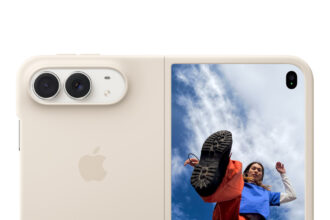
The device is expected to launch alongside the iPhone 18 Pro and Pro Max in September. Multiple credible sources including Bloomberg and MacRumors back this timeline, and trial production reportedly began at Foxconn’s Zhengzhou facility in early April 2026 — a significant milestone.
What makes this phone genuinely different from every Android foldable on the market? The hinge. Apple is reportedly using a liquid metal hinge — an amorphous metal alloy that’s harder than titanium, more elastic under stress, and can be precision-cast into complex shapes that conventional metals simply can’t match. Every foldable phone owner’s biggest fear is the hinge wearing out over time. Apple may be solving that problem at a materials level before it even becomes a complaint.
The display is where things get really interesting. The inner screen is expected to measure around 7.8 inches when fully open, with a 5.5-inch outer screen when folded. The crease — the visible fold line that bothers everyone who’s used an Android foldable — is reportedly under 0.15mm deep and under 2.5 degrees in angle. For context, Samsung doesn’t even publish crease measurements for its phones. Apple is engineering to a standard its competitors haven’t even bothered setting.
One notable trade-off: Face ID is likely out. The device is expected to use a side-mounted Touch ID instead, because the TrueDepth camera system requires too much space for the phone’s ultra-thin 4.5mm profile when unfolded. Two 48MP rear cameras replace the usual three-lens Pro system, meaning no dedicated telephoto. These are real compromises — and worth knowing about before you get too excited.
On the software side, leaks suggest iOS 27 with native Split View has been built specifically around the foldable’s larger inner display — not just adapted from an existing iPhone or iPad interface.
The price is expected to start around $1,999 for the 256GB model, making it comfortably the most expensive iPhone ever made. Higher storage tiers could push into $2,600 or beyond.
Why it matters: Apple entering the foldable market doesn’t just add one more phone to the category. It validates the entire concept for millions of people who were waiting to see if a company known for reliability would put its name on a folding phone.
2. Samsung Galaxy Z Fold 8 & Z Fold 8 Ultra
Expected Launch: July 22, 2026 (London) | Expected Price: Around $2,100

Samsung is doing something it hasn’t done in years: significantly changing the foldable lineup instead of just spec-bumping it.
The Galaxy Unpacked event is expected on July 22, 2026, reportedly held in London — a break from Samsung’s usual pattern of hosting in South Korea or the US. Three foldables are on the table: the Galaxy Z Fold 8, Galaxy Z Fold 8 Ultra, and Galaxy Z Flip 8.
Here’s the key thing to understand about the naming: The Z Fold 8 is actually a new, wider form factor — a broader device designed to compete with Apple’s expected foldable iPhone dimensions. The Z Fold 8 Ultra is the true successor to last year’s Z Fold 7, keeping the taller, narrower design. Both are expected to run the Snapdragon 8 Elite Gen 5 chip globally — the same processor in the Galaxy S26 Ultra — with up to 16GB of RAM.
The camera upgrade on the Ultra is significant. The ultrawide camera reportedly jumps from 12MP on the Z Fold 7 all the way to 50MP, alongside a 200MP main sensor. Battery goes from 4,400mAh to 5,000mAh with 45W charging (up from just 25W). Those are meaningful improvements for daily use.
One detail generating a lot of debate: there’s a built-in S Pen slot rumored for the Ultra. If confirmed, it would be the first time the Fold series has ever housed the stylus inside the phone body rather than requiring a separate case. Colors for the Z Fold 8 reportedly include Cream, Graphite, Lavender, and Pistachio. The Ultra gets more premium finishes: Green Shadow and Violet Shadow.
Interestingly, Android 17 with Google’s Gemini Intelligence AI is expected to debut on these foldables — potentially before even the Pixel 11 series gets it.
Why it matters: Samsung has been making foldable phones since 2019. These phones represent eight generations of hard-won engineering experience — and that matters when Apple is entering the category for the first time.
3. Honor Robot Phone
Expected Launch: Q3 2026 | Price: Not Yet Confirmed

This one is unlike anything else in this list.
Honor unveiled what it’s calling the Robot Phone at MWC 2026, and it won one of the show’s best showcase awards. The device features a camera module mounted on a robotic arm that physically pops out of the main body. The arm is motorized, and the camera can autonomously lock onto a face or object and track it as it moves — no manual positioning needed. You can even talk to Honor’s AI assistant and the camera responds to yes/no questions by nodding or shaking the arm.
The whole concept was inspired by DJI’s Osmo product line, and Honor has partnered with ARRI — the company behind professional cinema cameras used on major film productions — to bring advanced video stabilization and recording modes directly to a smartphone. It promises automated 90-degree and 180-degree “spinshots,” plus the most advanced video image stabilization in any smartphone.
And it’s not a concept anymore. Honor officially confirmed a Q3 2026 global launch in May. The Robot Phone will go head-to-head with the iPhone Fold and Pixel 11 series in what is shaping up to be the most crowded high-end launch window in years.
One genuine concern: durability. A mechanical arm that extends from a phone body is a moving part exposed to drops, dust, and everyday wear. Whether the hinge on that arm holds up over months of real-world use is something reviewers will test aggressively. Honor hasn’t shared information on which markets will get it first, and whether it will be widely available globally is still an open question.
Why it matters: It’s the most genuinely original smartphone concept in years. Whether it succeeds or fails, the Honor Robot Phone is the kind of device that pushes the whole industry to think differently about what cameras in phones can do.
4. Samsung Galaxy Z Flip 8

Expected Launch: July 22, 2026 | Expected Price: Not Confirmed
The Galaxy Z Flip 8 is launching alongside the Fold lineup and is expected to bring a crease-free display — something Samsung has been chasing for years in the clamshell form factor — along with a new hinge design.
Color options leaked include Cream, Graphite, Mint, and Pink. Storage options are expected to top out at 512GB, unlike the Fold models which may get a 1TB tier. The Z Flip 8 will use the Exynos 2600 chip in some markets and is expected to come with improved battery life — historically the weakest point of the entire Z Flip lineup.
Leaker IceUniverse shared images showing a cover screen that appears noticeably larger than the Flip 7, which could make the outer display significantly more useful for notifications, widgets, and quick interactions without needing to fully open the phone.
Why it matters: Clamshell foldables are the “affordable” entry point into folding phones, and the Flip 8 could be the first one with a display worthy of the name.
5. Vivo X Fold 6
Expected Launch: Mid-2026 | Price: Rumored to increase significantly from predecessor

The Vivo X Fold 6 has generated a lot of attention lately — not just for its specs, but for a rumored price hike of around $400 over its predecessor.
That said, if the leaked specs are accurate, the price hike might make sense. The inner display is expected to be an 8.03-inch 2K LTPO AMOLED at 120Hz with 4,500 nits peak brightness. The rumored battery is 7,000mAh — potentially the largest battery ever placed inside a book-style foldable phone, by a significant margin.
Cameras are expected to include a 200MP main sensor, 50MP ultrawide, and 50MP periscope with telemacro capabilities. On the chip side, Vivo has officially confirmed the X Fold 6 will be powered by MediaTek’s Dimensity 9500 Super Edition, switching from Qualcomm — a notable change from previous models.
For buyers in China, this will be a serious contender against the Samsung Galaxy Z Fold 8. Global availability is less certain.
Why it matters: A 7,000mAh battery in a foldable would redefine expectations for how long these devices can actually last. That’s a practical advantage that will matter to every user, regardless of how impressive the cameras are.
6. Google Pixel 11 Pro Fold
Expected Launch: Fall 2026 | Price: Not Confirmed

Google’s foldable has steadily earned respect since the Pixel Fold first launched. The Pixel 11 Pro Fold is expected to continue that trajectory, now with the Tensor G6 chip and deeper Gemini AI integration than any previous Pixel.
The Tensor G6 is expected to bring meaningful gains in on-device AI performance — which matters more with Gemini than it did with earlier Google Assistant features. Google’s approach to the foldable form factor has always focused on software experience over raw specs, and that continues here. Expect tight integration with Android 17, Google Photos, and the full Gemini suite.
The Pixel 11 Pro Fold is expected to launch alongside the Pixel 11 and Pixel 11 Pro, giving Google a strong fall lineup that competes directly with Apple’s September event.
Why it matters: The Pixel foldable is the only phone in this category that comes with guaranteed software updates for seven years, a full clean Android experience, and no manufacturer skin on top. For Android purists, there’s nothing else like it.
7. Huawei Pura 90
Expected Launch: March–April 2026 | Price: China-focused, not widely available globally

Huawei is still making some of the most technically impressive smartphones in the world, even without access to Google services or the latest chips from US suppliers. The Pura 90 series is expected to arrive in spring 2026, powered by the company’s in-house Kirin 9030 chipset.
Leaked features include satellite messaging support, a refreshed flat-screen design, and camera hardware that continues to challenge the best from Samsung and Xiaomi. Huawei’s photography pipeline has consistently produced results that professional reviewers find difficult to dismiss, regardless of geopolitical context.
Realistically, global buyers will have limited access to the Pura 90. But it represents a genuine alternative ecosystem — and it keeps Huawei’s engineering teams sharp and competitive in ways that eventually push the rest of the industry.
Why it matters: Huawei proves every year that smartphone innovation isn’t exclusive to companies with access to Western chip supply chains. The Pura 90 will set a standard in camera processing that everyone else will have to respond to.
8. Xiaomi MIX Fold 5 (Also Possibly Named Xiaomi 17 Fold)
Expected Launch: Q3 2026, possibly July | Price: Not Confirmed

Xiaomi’s next book-style foldable has been confirmed by leakers, but the name isn’t finalized yet. Internally designated Q18 with model number 2608BPX34C, it’s expected to arrive in Q3 2026 — likely July, ahead of the Xiaomi 18 series launching in September.
The most significant detail is the chip: the device is expected to use Xiaomi’s next in-house processor, the Xring O3, which would succeed the Xring O1 that debuted in the Xiaomi 15S Pro. If Xiaomi can deliver a foldable with a competitive proprietary chip, it would mark a meaningful step toward hardware independence.
Beyond the chip, details are still sparse. But Xiaomi’s recent track record with the MIX Fold series suggests solid camera hardware, aggressive pricing for a foldable, and a thin profile that makes competing devices look chunky.
Why it matters: Xiaomi making its own chips for its foldable lineup is a story that will matter to the industry long after this phone launches. It’s the kind of vertical integration move that changes how the entire Android supply chain works.
9. OnePlus 16
Expected Launch: Late 2026 for Asia | Price: Likely Flagship Killer Range

OnePlus used to be the phone that made expensive smartphones feel embarrassing by comparison. The company lost some of that edge over the years, but the OnePlus 16 is generating real interest again — largely because of one specific rumor: the thinnest bezels ever seen on a OnePlus phone.
The device is expected to carry the latest Snapdragon chipset, a powerful three-lens rear camera system, and OnePlus’s signature fast charging. Whether it will actually launch in the US and Europe is genuinely uncertain. OnePlus has pulled back significantly from Western markets, and its sibling brand Oppo has taken over in many territories. The OnePlus 16 may be primarily an Asia-focused release.
If it does get a global launch, it would be competing directly against the Samsung Galaxy S26 series at a lower price — which is exactly the kind of fight OnePlus used to win.
Why it matters: Not every phone needs to be a $2,000 statement piece. The OnePlus 16 could remind people that flagship performance doesn’t have to mean flagship pricing.
10. Oppo Find X10 / Vivo X500 Series

Expected Launch: October 2026 | Price: Not Confirmed
These two sit at the end of the 2026 calendar but deserve a mention because the late-year Android flagships from Oppo and Vivo have consistently been among the most technically impressive phones of any given year — they just don’t get the same Western media coverage as Samsung and Apple.
Both the Find X10 and Vivo X500 series are rumored to be powered by the MediaTek Dimensity 9600 chipset. Oppo’s Find X series has become known for its variable aperture camera technology, and the X10 could refine that further with the next generation of computational photography tools. Vivo’s X series consistently wins blind camera comparisons with its Zeiss-tuned lens system.
If you’ve never considered a Chinese flagship, these are the two most worth paying attention to in late 2026.
Why it matters: Camera innovation in 2026 is happening fastest in China, and these phones are where you’ll see it first.
What to Make of All This
The most striking thing about the 2026 smartphone landscape isn’t any single device. It’s the fact that every major manufacturer is under pressure to do something genuinely new.
Foldables are no longer a novelty — they’re becoming a category. AI features are table stakes, not differentiators. Cameras are so good on every flagship that improvements are measured in fractions of a stop of dynamic range. To stand out, you need a liquid metal hinge, a robotic arm, a 7,000mAh battery, or your own custom chip.
That pressure is producing some of the most interesting phones in years. Whether you’re waiting for Apple’s long-overdue entry into foldables, Samsung’s revamped lineup, or something completely different from Honor, 2026 is shaping up to be a genuinely exciting year to follow smartphones.
Just maybe wait for the reviews before pre-ordering.
All specifications and launch details mentioned in this article are based on leaks, analyst reports, and supply chain rumors as of June 2026. None of these products have been officially announced unless stated otherwise. Prices and availability may change.