


Trying to rank the top 10 best fighter jets in the world is more complicated than comparing top speeds or counting how many missiles each aircraft can carry. Modern air combat increasingly depends on who can detect the other side first, share targeting information faster, survive inside heavily defended airspace and employ weapons before an opponent has time to react.
That makes the idea of a single “best fighter jet” somewhat subjective. An aircraft built primarily for air superiority has different strengths from a carrier fighter or a long-range strike platform. There is also a major difference between capabilities demonstrated in operational service and those that manufacturers or governments say an aircraft will eventually have.
For this ranking, we gave the most weight to:
- Stealth and overall survivability
- Sensors and situational awareness
- Electronic warfare and networking
- Air-to-air and strike capability
- Range, payload and flight performance
- Operational maturity
- Potential for future upgrades
Speed and maneuverability still matter, of course, but they no longer tell the whole story. With those factors in mind, here is our ranking of the 10 best fighter jets in the world.
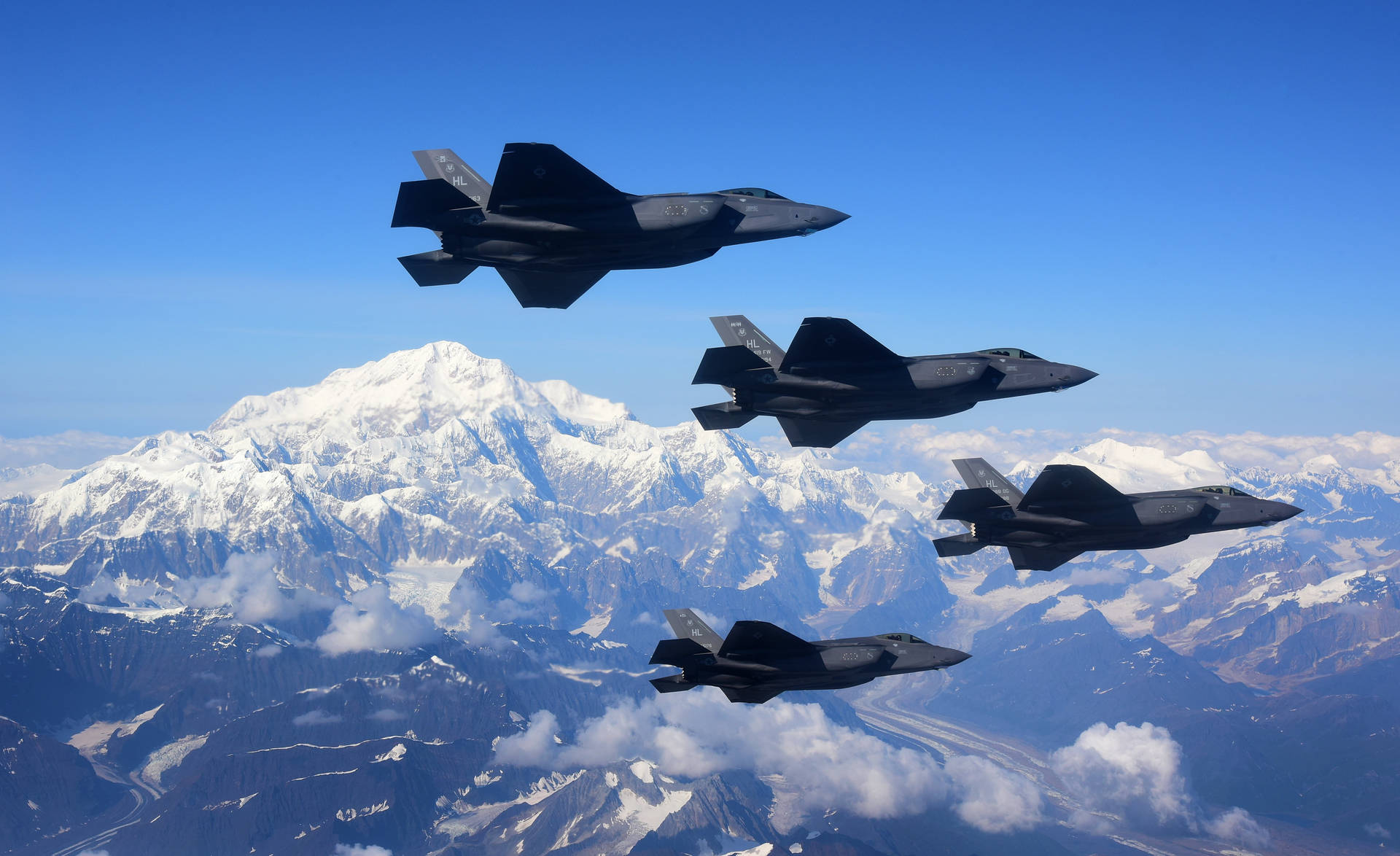
1. F-35 Lightning II

The Lockheed Martin F-35 Lightning II takes the top spot not because it is the fastest or most maneuverable fighter here, but because few aircraft combine stealth, sensors, electronic warfare and information sharing as effectively in a single operational platform.
The F-35 was designed from the beginning around low observability. Just as important, however, is what happens after its sensors detect something. The aircraft combines information from multiple onboard systems into a consolidated picture for the pilot and can share that information with other forces. In a modern conflict, an F-35 does not necessarily have to destroy every target itself to have an impact; it can also help other aircraft, ships and ground units understand what is happening around them.
Its top speed of Mach 1.6 is modest compared with aircraft such as the F-22, F-15EX and Eurofighter Typhoon, but maximum speed is only one part of survivability. The F-35 is designed to detect threats and engage them without relying on a traditional close-range dogfight.
There are legitimate drawbacks. The aircraft remains expensive to operate, and the U.S. F-35 fleet has faced persistent readiness and sustainment problems. Its Block 4 modernization program has also suffered delays. Those issues matter, but they do not erase the combination of stealth, sensor fusion, electronic warfare and multinational interoperability that puts the F-35 at the top of this list.
2. F-22 Raptor
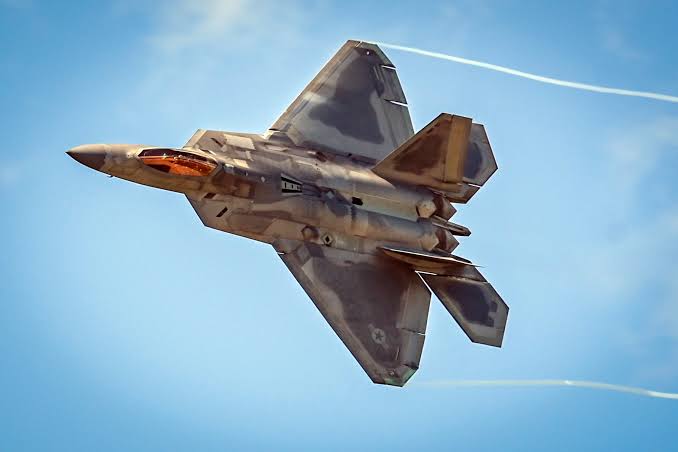
If this ranking were based purely on air superiority, there would be a strong case for putting the Lockheed Martin F-22 Raptor at number one.
The Raptor combines very-low-observable design, high-end sensors, thrust vectoring and exceptional aerodynamic performance. It can also supercruise at more than Mach 1.5, allowing it to sustain supersonic flight without relying on fuel-hungry afterburners. That combination was designed around a straightforward objective: see an opposing aircraft first, get into an advantageous position and fire before the opponent can effectively respond.
The F-22 is also remarkably agile when a fight does become close-range. Its thrust-vectoring engines and flight-control system give the aircraft capabilities that remain impressive decades after its first flight.
What keeps the Raptor below the F-35 in our overall ranking is not its air-to-air performance but its broader limitations. Production ended years ago, the fleet is relatively small, the aircraft was never exported and its upgrade ecosystem is not as expansive as the F-35 program. For the specialized job of establishing air dominance, however, the F-22 remains one of the most formidable fighters ever built.
3. Chengdu J-20

China’s Chengdu J-20 has developed from an intriguing stealth program into one of the most important combat aircraft in the People’s Liberation Army Air Force.
The J-20 is a large fifth-generation fighter built around low observability, long-range operations and advanced air-to-air combat. Its size gives China considerable room for fuel, internal weapons and sensors, while its stealth shaping is intended to reduce the distance at which hostile radars can effectively detect and track it.
The Pentagon’s assessments of Chinese military development have described the J-20 as operationally fielded and noted China’s expanding inventory of advanced aircraft. That production momentum matters. A sophisticated fighter is strategically more significant when it can be deployed in meaningful numbers and supported by airborne early-warning aircraft, long-range missiles and a wider network of sensors.
Some of the J-20’s most frequently quoted specifications should still be treated cautiously. Exact radar signature, sensor performance and the capabilities of its newest engines are not publicly established. Claims that it can routinely maintain Mach 2 without afterburner, for example, go beyond what reliable public information currently demonstrates.
Even with those unknowns, the J-20’s combination of stealth, range and China’s rapidly improving air-combat ecosystem makes it difficult to rank outside the top three.
4. Dassault Rafale

The Dassault Rafale shows why stealth is important without being the only measure of a modern fighter.
France designed the Rafale as an exceptionally broad multirole aircraft. Depending on its configuration, the same basic platform can perform air-defense, deep-strike, reconnaissance, maritime-strike and nuclear-deterrence missions. Its RBE2 AESA radar works alongside passive sensors and the SPECTRA electronic-warfare suite to give the pilot several ways to detect threats and respond to them.
The Rafale is also capable of using weapons such as the Meteor beyond-visual-range air-to-air missile and a wide range of precision-guided strike weapons. That combination of sensors, electronic warfare and weapon flexibility gives the aircraft considerable combat value even though it was not designed with the level of all-aspect stealth associated with the F-35.
Another reason the Rafale ranks highly is its upgrade path. The F4 series is introducing additional connectivity and combat-system improvements, while France has already started work toward the more ambitious F5 standard and collaborative operations with an unmanned combat aircraft.
Against the most sophisticated integrated air defenses, the lack of fifth-generation stealth is an obvious disadvantage. In missions where that is less decisive, however, the Rafale remains one of the most complete fighters currently available.
5. Eurofighter Typhoon

The Eurofighter Typhoon started life with air superiority at the center of its design, and that heritage is still obvious in its performance. Its two EJ200 engines, delta wing and canards give it excellent acceleration and maneuverability, while its maximum speed is around Mach 2 at altitude.
Over time, however, the Typhoon has become much more than an air-to-air fighter. Modern versions can perform precision-strike missions while carrying advanced air-to-air weapons, and the aircraft’s sensor and electronic-warfare capabilities continue to evolve.
One of the most important developments is the move toward electronically scanned radar systems. Different Typhoon operators do not all use exactly the same radar and upgrade configuration, so it is misleading to treat every aircraft in the worldwide fleet as identical. The latest standards nevertheless give the platform significantly improved detection, tracking and electronic-warfare potential.
The Typhoon does not have the low-observable design of a fifth-generation fighter. What it offers instead is speed, altitude performance, a strong weapons portfolio and a modernization roadmap intended to keep it relevant alongside stealth aircraft and future collaborative combat systems.
6. Boeing F-15EX Eagle II

The Boeing F-15EX Eagle II takes a very different approach from the stealth fighters near the top of this ranking. Rather than trying to disappear from radar, it brings speed, range, sensors and an enormous weapons payload.
Boeing lists a maximum payload of 29,500 pounds and a top speed of Mach 2.5. That gives the F-15EX the ability to carry combinations of weapons that would be impractical for smaller fighters, including large numbers of air-to-air missiles and future oversized weapons.
That does not make the F-15EX a substitute for the F-35. In heavily defended airspace, its lack of a true low-observable airframe is a significant limitation. A more realistic way to view it is as a complementary platform: stealth aircraft can operate closer to sophisticated threats and provide targeting information, while an F-15EX can bring a much larger weapons load from farther back.
The aircraft also benefits from modern radar, electronic warfare and digital systems while retaining infrastructure and experience accumulated across decades of F-15 operations. In a high-end force built from several different aircraft types, that combination makes the Eagle II extremely useful.
7. Saab JAS 39 Gripen E

The Saab JAS 39 Gripen E is easy to underestimate because it is smaller than most of the aircraft above it. Its strengths become clearer when the fighter is viewed as part of a distributed air-combat network rather than simply compared by size or raw engine power.
Gripen E combines an AESA radar, infrared search-and-track system, modern electronic warfare equipment and extensive datalink capability. Saab has also designed the aircraft around a highly adaptable avionics architecture, allowing mission software and capabilities to be updated without redesigning large portions of the aircraft.
The fighter has ten hardpoints and was developed with dispersed operations in mind. The ability to operate from relatively austere locations, turn aircraft around quickly and reduce dependence on large vulnerable air bases can become an important advantage during a real conflict.
The Gripen E does not offer fifth-generation stealth, and its smaller size places obvious limits on how much fuel and weaponry it can carry compared with aircraft such as the F-15EX. Its fleet is also much smaller than that of the F-35. But its combination of electronic warfare, networking, operating efficiency and rapid upgrade potential earns it a place among the world’s most capable modern fighters.
8. Sukhoi Su-57

Few aircraft on this list generate as much debate as Russia’s Sukhoi Su-57.
On paper, the Su-57 combines several attributes expected from a fifth-generation fighter: reduced-observable shaping, internal weapon bays, advanced sensors, high aerodynamic performance and thrust-vectoring engines. Its maneuverability is particularly impressive, and the aircraft was designed to remain capable at extreme angles of attack as well as at high speed.
The problem with comparing the Su-57 directly with aircraft such as the F-22 and F-35 is the lack of independently verifiable information. Precise radar-cross-section figures frequently published online should not be treated as established specifications, and Russia’s claims about the aircraft’s combat performance can be difficult to independently confirm.
Production scale is another factor. The Su-57 fleet remains much smaller than major Western and Chinese fighter fleets, limiting the amount of operational evidence available. Russia is continuing to develop the platform, including flight testing of a new engine in late 2025, so the aircraft may become more capable as the program matures.
Its flight performance and potential are enough to keep it in the top 10, but uncertainty surrounding fleet size, stealth performance and overall maturity prevents us from placing it higher.
9. Shenyang J-35 / J-35A

The Shenyang J-35 is the most difficult aircraft to rank here because far less is publicly known about it than established fighters such as the F-35, Rafale or Typhoon.
China is developing the aircraft family in both land-based and carrier-oriented forms. Its design incorporates features associated with low-observable fighters, including carefully shaped surfaces and internal weapon carriage. The carrier version is particularly significant because it is expected to give China’s newest aircraft carriers a stealth fighter rather than relying exclusively on derivatives of the J-15.
The J-35 has also taken part in testing associated with China’s Fujian aircraft carrier, while the land-based J-35A has been publicly displayed. What is less clear is exactly how many aircraft are operational, what standard they have reached and how their sensors, electronic-warfare systems and stealth characteristics compare with mature fifth-generation fighters.
That uncertainty is important. Some public assessments describe the J-35A as moving into service, while other 2026 fleet references still do not count the aircraft because its operational status has not been sufficiently confirmed.
For that reason, ninth place should be considered provisional. The J-35 could move significantly higher as China fields the aircraft in larger numbers and more reliable information about its capabilities becomes available.
10. F/A-18E/F Super Hornet

The Boeing F/A-18E/F Super Hornet is one of the oldest basic designs in this ranking, but writing it off because of age would ignore what the aircraft still brings to carrier aviation.
The Super Hornet is a combat-proven multirole fighter designed to handle air-to-air missions, precision strike, suppression of enemy air defenses, reconnaissance and aerial refueling from an aircraft carrier. Boeing lists 11 weapons stations and hundreds of approved loadout combinations, giving commanders considerable flexibility when configuring the aircraft for a mission.
Block III improvements strengthen the fighter where modern combat increasingly demands it: networking and information management. The upgraded configuration includes an advanced cockpit, updated communications and an open-architecture mission system, while AESA radar and infrared search-and-track capabilities strengthen its ability to find and engage threats.
Its main weakness is straightforward. The Super Hornet cannot match the survivability of an aircraft designed from the outset around fifth-generation stealth. Against advanced integrated air defenses, that matters considerably.
But carrier suitability is a capability of its own. The Super Hornet combines mature carrier operations, a broad weapons inventory, strong reliability and decades of combat experience. Until newer carrier-based fighters become fully established, it remains one of the most useful naval combat aircraft in service.
So, which fighter jet is actually the best?
There is no answer that works for every mission. The F-22 remains exceptionally difficult to beat as a dedicated air-superiority fighter, while the F-15EX offers a level of payload and speed that stealth fighters cannot match. Rafale and Typhoon provide highly capable alternatives for countries that want advanced multirole fighters without moving to an F-35 fleet, while Gripen E puts unusual emphasis on networking, electronic warfare and dispersed operations.
Our number-one choice is still the F-35 because modern air warfare is increasingly about more than the aircraft directly in front of the pilot. Its combination of low observability, sensor fusion, electronic warfare and information sharing allows it to influence a much larger battlespace. Its sustainment and modernization problems are real, but judged as a complete combat system rather than by one specification, it remains the strongest overall choice on this list.
The ranking could also change faster than many people expect. China is expanding the J-20 fleet and developing the J-35 family, Russia continues to modify the Su-57, Europe is pushing major Rafale and Typhoon upgrades, and sixth-generation programs are moving closer to becoming operational systems. The fighter that looks dominant today may not hold the same position a decade from now.