



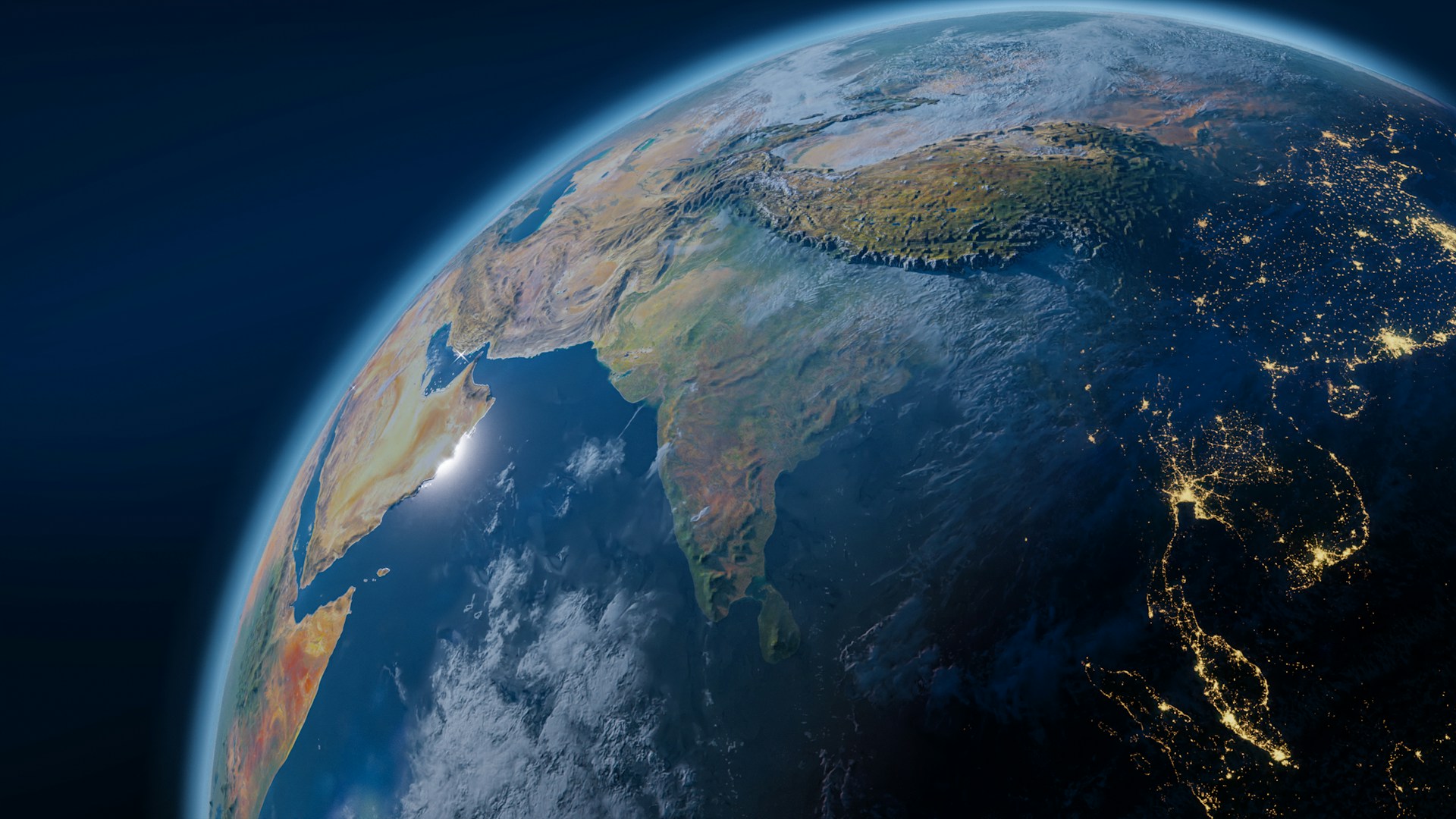
A gradual decline in the earth’s population to about 4 billion people by 2200 could reduce environmental damage and improve long-term living conditions, according to a newly published study.
The research does not advocate removing people from the population or imposing limits on childbirth. Instead, its authors propose allowing the global population to decline naturally over several generations by expanding voluntary family-planning services, improving educational opportunities and empowering women to decide whether and when to have children.
The paper, titled Achieve Sustainability by Easing Population to 4 Billion by 2200, was published in the Wiley journal Sustainable Development. It was written by 11 researchers affiliated with universities and research organizations in the United States, Greece, Australia, Canada, Kenya, Austria, Argentina, Bangladesh, China and India.
Researchers examined eight measures of human impact
The researchers studied global data covering the period from 1970 to 2020. They compared changes in the human population with eight environmental indicators:
- Wildlife abundance, measured through the Living Planet Index
- Carbon dioxide emissions
- Total energy consumption
- Humanity’s ecological footprint
- Freshwater use
- Mineral extraction
- Plastic production
- Agricultural pesticide use
The analysis found strong statistical relationships between population growth and worsening trends across these measures. However, the authors also emphasized that environmental pressure is determined not simply by the number of people but by the average impact generated by each person.
Their analysis is based on the principle that total environmental impact is the product of population size and per-capita impact. That means a smaller population would not necessarily be sustainable if average consumption, pollution and resource extraction continued rising sharply. Conversely, reductions in waste and consumption could lessen environmental pressure even before the population begins declining.
The study found, for example, that average annual carbon emissions increased from about 3.87 tonnes per person in 1970 to 4.09 tonnes in 2020. Average energy consumption rose from 55.5 to 71.8 gigajoules per person, while mineral extraction more than doubled from 3.3 to seven tonnes per person.
Plastic production showed one of the most dramatic increases, rising from approximately 9.5 kilograms per person in 1970 to more than 59 kilograms in 2020. These figures illustrate why the researchers argue that addressing population alone would not be enough.
What would happen under different population scenarios?
The researchers applied historical trend lines to several future population scenarios. Under a high-fertility United Nations scenario used in the paper, the population would reach approximately 11.4 billion in 2100 and more than 21 billion in 2200. Under a faster-development and lower-fertility scenario from the Institute for Health Metrics and Evaluation, the population would decline to around 6.9 billion in 2100 and 4.1 billion in 2200.
The study’s projections indicate that environmental pressures would generally worsen under higher-population scenarios and improve under scenarios involving both population decline and reduced per-person impact. The researchers associate the lower scenarios with reduced emissions, lower energy and freshwater demand, less extraction of minerals, decreased plastic production and improved prospects for wildlife recovery.
However, these numbers should not be treated as precise forecasts. The authors acknowledge that their calculations are intended to show the likely direction of change rather than exactly predict environmental conditions almost two centuries from now. Technological developments, government policies, consumption patterns and regional differences could substantially alter the outcomes.
The paper’s 2100 population scenarios draw partly from the UN’s 2024 projections, while its longer-range UN figures for 2200 are based on projections published in 2004. That reliance on older long-term estimates is another reason to interpret the 2200 figures cautiously.
The world is already expected to stop growing
The United Nations’ central projection does not currently foresee the population falling to four billion this century. Its 2024 assessment estimated that the global population would rise from 8.2 billion in 2024 to approximately 10.3 billion during the mid-2080s before declining slightly to about 10.2 billion by 2100.
The UN nevertheless said that an earlier and lower population peak could reduce aggregate environmental pressure. It also cautioned that slower population growth would not remove the need to lower the environmental impact associated with each person’s activities.
Voluntary choices, not population control
The study’s authors argue that a gradual decline could be encouraged through access to contraception, education for girls, delayed marriage, improved health services and greater economic and social freedom for women.
This distinction is important because past population-control programmes have included forced sterilization, coercive birth restrictions and other human-rights abuses. The proposed approach is instead based on people freely choosing the number and timing of their children.
The United Nations Population Fund describes access to safe and voluntary family planning as a human right. It estimates that approximately 259 million women who want to avoid pregnancy are unable to use safe and effective modern contraceptive methods because of barriers involving access, information, cost or social support.
Four billion is not a universally accepted limit
The figure of four billion should not be interpreted as a scientifically established maximum population for Earth. Estimates of the planet’s human carrying capacity vary widely because they depend on assumptions about technology, food production, energy, trade, resource distribution and the standard of living considered acceptable.
Population researcher Joel E. Cohen has noted that published estimates have ranged from fewer than one billion to more than 1,000 billion people, with roughly half falling between four billion and 16 billion. He argues that any assessment must consider not only population numbers but also consumption, inequality, political systems and human choices.
The new research therefore presents four billion as a proposed long-term sustainability target rather than a settled scientific threshold. Its central argument is that gradually ending population growth, reducing excessive consumption and giving people greater reproductive freedom could together improve the chances of maintaining a stable climate, functioning ecosystems and a reasonable quality of life for future generations.





Of course it is bullshit. Nobody believes these stories anymore. It is just a way to get rid of useless people and leave abundance on earth for the happy few and their non-organic slaves.
Is no measurable pressure humans put on Earth. You can put the entire human population on the planet in Texas and will be plenty or room left to spare. BS.