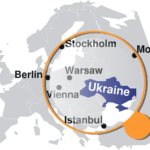



The UK government’s newly launched “Be Ready” campaign is the country’s first nationwide resilience campaign since the Cold War. The campaign warns that British citizens have ‘a little over 1,000 days’ to prepare for potential warfare by 2030.
Led by Defense Secretary Wes Streeting, the campaign shifts the focus from traditional battlefield dynamics towards household-level security. Rather than bracing solely for “Russian tanks rolling across borders,” the initiative urges civilians to prepare for high-impact domestic disruptions. These include state-sponsored infrastructure sabotage, AI-driven cyberattacks, and climate-induced blackouts.
72-Hour Stockpile Directives
The government’s official two-page guidance document sets out a framework for a 72-hour stockpile. This is a collection of emergency supplies to sustain a household entirely off-grid for three days. This represents the operational window required for emergency services and utility companies to restore services. By ensuring population self-sufficiency for 72 hours, emergency personnel will be able to prioritize vulnerable areas.
The guidelines urge citizens to prepare 9 liters of bottled water per person, along with non-perishable, high-calorie food items. Furthermore, citizens are advised to keep a wind-up or battery-operated FM radio to receive emergency updates if mobile networks and local internet services become unavailable. Citizens are also advised to keep cash in small denominations, among other supplies.
Building Civic Resilience
The government directives aim to build civic resilience rather than trigger panic buying. In a traditional crisis model, the state immediately steps in and provides basic necessities. Civic resilience depends on civilians maintaining a 72-hour buffer, allowing the state to focus on critical matters. The 72-hour window allows authorities to isolate cyberattacks, emergency services to clear physical blockages, and logistical hubs to deploy targeted relief to those who need additional assistance.
This model is rapidly being adopted across democratic nations. Countries such as Sweden, Finland, and Japan have integrated civil defense into their cultural identity for decades. The implementation of this strategy demonstrates that a nation’s resilience is measured not just by its military hardware but also by the readiness of its citizens.